Showing posts with label Authors. Show all posts

Sunday, March 20, 2016

Fantasy Novels I've Read Recently


We're already almost a quarter of a way through 2016, so I wanted to list some of the books I've read and enjoyed over the past two months or so. The last two, Updraft and Uprooted, were published in 2015 and are eligible for the 2016 Hugo Awards. If you're eligible to nominate for the Hugos this year (the March 31 deadline is rapidly approaching), I recommend you give these a read if you haven't already. I'd never tell anyone else what they should like, but I think both of these books are Hugo Worthy. 

The other titles on this list are excellent too, and I strongly recommend them.

Cover by Todd Lockwood
A Natural History of Dragons by Marie Brennan. Tor 2013. I put off reading this book, because I thought it was going to be a fake reference book or something, but it's actually a delightful story, written memoir style, about Isabel, a woman living in a quasi-Victorian world that is very similar to our own, except that it has dragons. Fantasy elements are slight, and the dragons portrayed are very naturalistic--intelligent animals. The book starts with a the protagonist's childhood memories of dissecting a dead dove (and getting punished for it) and collecting specimens, and nearly being killed by a creature called a "wolf drake."

After Isabel marries a man with similar interests, she manages to get them a berth on a research trip to a mountainous country to study a breed of dragons called "rock wyrms." The narration is alive with voice and the protagonist's wry wit, and the tale kept me riveted until the end. I've just read the sequel, entitled The Tropic of Serpents, and it's every bit as good. These books definitely a change of pace from the style of epic fantasy I usually prefer, but I enjoyed them thoroughly and plan on reading the rest of the books in this series.

Cover by John Jude Palencar
Broken Blade by Kelly McCullough. Ace books, 2011. Aral, the protagonist, is a former assassin priest of a goddess of justice who has been murdered by her fellow deities. Robbed of both faith and identity, he's a tattered remnant of his former self who works as a blade for hire between bouts of drinking. The only thing keeping him sane is Tris, his shadow-dragon familiar. I'm a sucker for "hot mess" characters and for stories with animal companions and magical familiars, so this premise attracted my interest. The author's wonderful deconstruction of the "trouble walked in wearing a red dress" trope in the opening scene drew me in.

The book was entertaining, cleanly written, and well paced, and I liked the pov character's voice. If there's a flaw, it's that the author was a bit light on environmental and character detail for my tastes. I tend to favor leanness here, but I couldn't really visualize the kinds of clothes they were wearing, the style of architecture, and the appearance, coloring, racial characteristics of the characters, so my mind kept defaulting to "pseudo-medieval, European with everyone white," but I don't know if this was the author's intent. It's a small thing, though. This is the first book in a series, and I look forward to reading the next one soon.

Cover by Kris Kamikakushi
"Hunting Monsters" by S.L. Huang. Book Smugglers Publishing 2014. This is a short story, published as a stand alone. It's available as an e-book on Amazon, and Barnes and Noble online. Set in a fairy tale world (incorporating elements from "Little Red Riding Hood," "Beauty and the Beast" and other classic tales), this is a wonderful example of how a good writer can layer world building and history into a short story. Like many good fairy tale protagonists, the main character lives in a small cabin in the woods. On her fifteenth birthday, her mother is arrested for the murder of a grundwirgen, creatures that resemble beasts but are people in the eyes of the law.

The writing in this story is very good. I've always had a weakness for retellings and reinterpretations of fairy tales, and this one was a page turner.

Cover by Steven Martiniere
Updraft by Fran Wilde. Tor Books, 2015. This has to be one of the most unique speculative fiction settings I've ever encountered. Set in a world where people live in bone towers (which appear to grow from somewhere below the clouds) and fly on silk wings, it follows Kirit, a protagonist who wants to become a trader like her mother, but is manipulated into becoming one of the singers who protects her city safe from attacks by invisible predators.

As a singer in training, Kirit stumbles across multiple layers of intrigue and discovers a truth that could change her world forever. This story is fascinating and well written. If it has a fault, its that the alien setting and culture, along with the highly immersive approach to world building (it's told in a very "here and now" style of first person with not an info dump in sight) makes it hard to understand and relate to the characters' motives at times. This may be a fault in me as a reader and not the book itself, however, and I found myself increasingly pulled in as I read. I look forward to the sequel, which is coming out later this year.

Cover by Scott McKowen
Uprooted by Naomi Novik. Del Rey books, 2015. This story draws from Polish fairy tales the author remembers from her childhood, and it's beautifully written. Set in a village where a 17-year-old girl is taken every ten years by the wizard who protects it from encroachment by a cursed wood, the story has a strong female protagonist who is driven by her love for her best friend. The world is vividly drawn and simultaneously familiar and relatable yet fresh with many unexpected twists. I liked the way the author was able to create a sense of menace while remaining basically optimistic about human nature. Kept me guessing until the end.

This is a stand alone-novel, something that's probably too rare in fantasy. I love series and I understand why writers and readers of fantasy like sweeping epics and want to return to their favorite worlds for tale after tale, but it's also pleasant to be able to lose oneself in a book and to reach the end without feeling like there are plot threads that still need to be tied off.

Sunday, March 6, 2016

Fantasy Novels Without War


Last time, I wrote about the popularity of war as a plot element in fantasy, but there are a number excellent novels that break with this tradition.

Before I can discuss this further, however, I have to define what I mean by military plot elements. This is important, because different readers may draw the line in different places, or differ in what they see as militaristic. I mentioned last time that a friend and I disagree about whether Anne McCaffrey's Dragonriders of Pern books are, at their heart, military stories, because I see the combat between the dragons and the thread as an "against nature" sort of context, but he has a point when he says that the dragon weyrs have many of the characteristics of a military, such as support via a system of tithes and a hierarchical rank structure.

For this reason, I've attempted to separate these ostensibly non-military fantasy novels into two broad categories: books where combat itself plays no significant role in the plot at all, and books where there are skirmishes and armed conflict at times, but it exists in a context that is personal or disorganized. In both cases, any "action," such that it is, is either incidental or a consequence of other plot elements, not what drives the main plot overall.
Original paperback edition of The Last Unicorn.
Cover art by Gervasio Gallardo


One fantasy classic I can think of that is an example of the first kind of story is Peter S. Beagle's The Last Unicorn (Viking Press, 1968). This stand-alone story is a well-beloved tale about a unicorn who suddenly realizes that she is the last of her kind and must find her missing brethren.

Another non-military fantasy I read quite recently is Katherine Addison's The Goblin Emperor (Tor Books, 2014). This is a fantasy of manners about mixed-race prince, raised away from court, who unexpectedly ascends the throne of Elfland and must learn to hold his own in the backstabbing world of politics.

Barbara Hambley's Stranger at The Wedding (Del Rey, 1994) is another story that could be described as a fantasy of manners. Its protagonist is Kyra, a young wizard who must crash her sister's wedding and surreptitiously use her meager assortment of spells to disrupt the nuptials and save her sister's life.

Mervyn Peake's Gormenghast trilogy (originally published by Eyre and Spottiswoode between 1948-1959) is about as non-military as a fantasy story can be. This is a gothic fantasy, one that's actually lacking in magical elements, with a plot that centers around machinations and jostling for position within a family. The characters don't even step outside their castle until the third book.

Mary Robinette Kowal's regency-style Glamourist History series (published by Tor books between 2010-2015) are set in a Regency-era world that is reminiscent of Jane Austin's stories, but one where ladies of quality are expected to be magicians.

Marie Brennan's Lady Trent novels (Tor books 2014, 2015) take place in a fictitious world with very Victorian sensibilities and follows the adventures of a "lady naturalist" who becomes her country's most celebrated expert on dragons.

Although the above novels are very different, they do share two things--little to no combat or "action" in the sense that many fantasy readers mean the term, and plotting where the stakes are highly personal, even if a deeper conspiracy is discovered as the story unfolds.

The second group of novels are more violent than the previous ones, and may contain some skirmishes and bloodshed, but larger-scale military conflicts don't drive the plot in any meaningful way.

Neverwhere by Neil Gaiman. (BBC Books, 1996). Based on the TV show by the same name that he co-wrote with Lenny Henry. Gaiman's stories get emotionally intense, violent and scary at times, but armies, pitched battle, and military campaigns aren't factors.

The Earthsea cycle by Ursula K Le Guin (first volumes published in 1968 by Parnassus Press) are a classic high fantasy where the stakes start out personal and expand until Ged and his companions save the world from the damage caused by magic. A raid on the protagonist's home village serves as plot catalyst at the beginning, but after that, there's little combat aside from one-on-one wizard's duels.

Patrick Rothfuss's The name of the Wind (Penguin Group, 2007) has a nasty fight with a bunch of giant spiders in the opening chapter, and a battle with a giant lizard near the end, but military engagements are notably absent. As of the end of the second book in the series, however, it appears that a larger-scale armed conflict is on the horizon.

The Harry Potter Novels by JK Rowling (Scholastic Books, 1997-2007) have plenty of physical conflict, and no few deaths, throughout the series. But there really isn't anything that could be described as a battle until the end of the last book. And that didn't take place in any kind of military context.

Fran Wilde's Updraft (Tor, 2015) is set in a world where people live in bone towers and fly with silk wings. While one-one-one combat between characters is important, the antagonists in her world resemble a secret police force, not an army.

The Gentleman Bastards series by Scott Lynch (Bantam Spectra, 2006-present) is filled with cloak and dagger and intrigue aplenty, along with some good old fashioned swashbuckling action, but as of the latest installment, the focus hasn't been on military conflicts.

I could keep listing examples, but if I did, I'd be writing all night. Many of Terry Pratchett's satirical Discworld novels focused on fantasy elements besides war (it really depended on which tropes he was taking a poke at). Same for many books by Patricia McKillip and Robin McKinley. And while Mercedes Lackey's Velgarth books usually contained a battle, and her heralds represented an elite group of officers, her Elemental Masters novels are simply fairy tale retellings that are, at their hearts, love stories.

So even though the fantasy genre (especially  fantasy taking place in secondary worlds) has the reputation for plots that center around the mustering of armies and the fighting of epic battles, there are a number of authors who have created individual novels, even series, where the plots are driven by relationships, intrigue, smaller-scale conflicts, personal goals, and political machinations. While many of these stories have stakes that are intensely personal, some do end up impacting the fate of entire kingdoms or worlds.

The take home message is that fantasy is a diverse genre with ample room for character driven stories that encompass a broad range of topics.

I know I've only scratched the surface here and have left out a number of great examples. Feel free to comment with more titles.

Saturday, March 5, 2016

RIP Pat Conroy

I don't generally mention deaths in my blog. But When I read about the passing of Pat Conroy yesterday, it made me very sad. He had an ability to make this reader care deeply about someone with whom they might have little in common on the surface. I think it's because of his rare gift for bleeding emotions onto the page. Walk in the light, Mr. Conroy. You were one of the greats.

http://www.nytimes.com/2016/03/05/books/pat-conroy-who-wove-his-family-strife-into-novels-of-carolina-dies-at-70.html

Friday, February 26, 2016

Why is the Fantasy Genre so Focused on War?


Warfare plays an important role in the fantasy genre. Many of its most iconic works embrace military themes, either as a central plot element or as a disruptive force that's more in the background but still creating obstacles and conflict for the protagonists.

Sometimes the military is front and center, as in Elizabeth Moon's Deed of Paksennarion novels or Django Wexler's Shadow Campaign. Other times battles occur intermittently throughout the series where much of the focus is on something else, as in Robin Hobb's Farseer Trilogy, and other times, war is completely in the background but still influencing the story, as in Carol Berg's Lighthouse Duology.

From https://en.wikipedia.org/wiki/File:Richard_Caton_Woodville's_The_Battle_of_Towton.jpg

I've wondered why this is. Many people look at the genre as escapist, and war is one of life's less pleasant realities. Few of us really want to live in its shadow as civilians or soldiers, and painstaking descriptions of military training, tactics, camp life, not to mention indignities such as dysentery, can be quite dull. Conflict, change, and stakes are necessary plot elements in any story, and war can certainly create these, yet other genres of fiction find ways to test their characters and introduce change without a focus on sieges, battles and military strategies or tactics. It's possible to create stories with compelling stakes that have nothing to do with war. This is the norm in many genres

When I put this question to some of my fellow fantasy readers and writers, one explanation was that historical epics, such as Gilgamesh and The Iliad focused heavily on battles and wars. Fantasy as a genre often attempts to recreate or evoke the tropes presented in these traditional tales, which often contained magical or supernatural elements.

The success of Tolkien's work is also a possible explanation. While he didn't dwell on the nitty gritty day-to-day life of soldiers, or even on military tactics, no one can argue that war was an important part of both The Hobbit and Lord of the Rings.

Given Tolkien's influence on the genre, it's hardly surprising that many writers adopted his approach. A focus on enemies who are unilaterally evil and under the control of a dark figure that must be stopped certainly does turn war into something that's more appealing from an escapist perspective.

I can't help but wonder how much of fantasy's sometimes idealistic portrayal of war was shaped by the two world wars in particular. Tolkien fought in WWI and lived through WWII as well. He claimed that his work was not meant to be allegorical, but it's hard not to see parallels between fascism and the minions of Sauron.

And Tolkien aside, those of us who were born and came of age in the decades following WWII had our consciousness shaped by the cultural memory of a war that really was against an implacable evil that could have destroyed civilization as we know it. Few would argue in hindsight that a more pacifistic approach would have been the best one in that particular instance. Could the warlike nature of late twentieth and early twenty-first century fantasy represent a collective desire to escape to a world where moral ambiguity was (in hindsight, at least) less than it is today? This is certainly possible, though I can't think of a way to test, or falsify such a hypothesis.

Another thing to consider is that war stories are often anti war stories at their heart. All Quiet on the Western Front is an iconic example here, but there are plenty of others. Fantasy novels are notably absent from this list, but I don't think fantasy writers always portray war in a positive light. TH White's The Once and Future King is a retelling of Mallory's version of the Arthurian legend, a heroic epic, yet some feel it was inspired by his own pacifism and misgivings about nationalism as he came to terms with a war (WWII) where the enemy clearly had to be stopped.

Other fantasy writers like Moorcock, and more recently Abercrombie, have also sought to deconstruct some of the tropes popularized by Tolkien and other fantasy writers from the earlier part of the 20th century. Moorcock's Elric saga, and the Abercrombie's novels are very violent and war-centered, yet neither glorifies war or presents it as something that improves the world.

And there are plenty of other explanations why war is so commonly portrayed in fantasy novels. It's often stated that in the early-to-mid 20th century at least, fantasy was traditionally aimed (with some noteworthy exceptions) at young, male readers. This is a demographic that is often drawn to tales of adventure, heroics, and self-sacrifice, and while war isn't necessary for stories to embrace such themes, it certainly lends itself well to them.

It's also possible to overstate the prevalence of war in fantasy, as there are a number of popular and iconic fantasy tales, many very recent, but some quite old, that have no military, battle, or war in them at all, or if they do, it's so much in the background that it has little to no impact on the plot. One thing that's really hard to do, given the thousands of trade-published titles (not to mention all the self published work that's become available more recently), is to actually tally up the books published during a given period to see if there are certain plot elements or themes which become more or less prevalent.

The diversity of the genre itself becomes problematic here. How does one define a war-focused story to begin with? Are Rowling's Harry Potter books war focused because the last book in the series had the siege of Hogwarts in it? I'd say it really isn't, but some might not agree.

A case in point, is that I never really thought of McCaffrey's Dragonriders of Pern books as militaristic, since it's unthinkable in that world to pit dragon against dragon or go to war over land when the whole planet must cooperate to survive. To me, these books always felt more like a long disaster relief effort with coming of age stuff, romance, interpersonal drama, and cloak and dagger plots, but a friend recently told me that they always made him think of one unending Battle of Britain, but with mindless spores instead of enemy planes and bombs. He has a point.

Wednesday, September 2, 2015

Some Great Fantasy Novels or Series That Rarely Make Those "Must Read" Lists


The web is a great place for learning about books and authors, but sometimes it seems like there's a "rich get richer" element to the various "must read" and "best of" or "top" lists that get linked on various sites. The same books and authors we've heard of already tend to come up. So I thought I'd toss some books out there that were either well-liked in their day but have fallen off the cultural radar or had a cult following of sorts but never made it into the fantasy "mainstream" (whatever that might be for the genre). In order to keep this from being just a list of my own unsung favorites, I've been picking the brains of my fantasy-loving friends as well, and some of their suggestions are included. This is not a complete list by any means, and I've got many more titles I'd like to discuss, maybe in a future entry.


1. Deryni Rising and sequels, by Katherine Kurtz. Published by Ballantine Books in 1970, reissued by Ace books in 2004. This was the first book in her Deryni series, which was fairly popular with fantasy geeks in the 70s and early 80s, but even though she is credited with influencing authors like Guy Gavriel Kay and George RR Martin, this novel and series are rarely included on "recommended" or "Must Read" lists today.

Set in the fictitious kingdom of Gwynedd, the fantasy society Kurtz created is much closer to a historically accurate medieval setting than is typical in epic fantasy. The stories focus heavily on magic, intrigue, and politics as Prince Kelson seeks to learn the truth about the not-so-accidental death of his father, his own magical heritage, and to put down the plot to steal his throne by sorceress and pretender Carissa.

2. Tales of the Otori by Lian Hearn, Riverhead Books, 2003-2005. (Across the Nightengale Floor, Grass For His Pillow, Brilliance of the Moon). This story takes place in a world inspired by feudal Japan. The protagonist, Takeo, a member of a persecuted religious group, is nearly killed when his village is destroyed. He's saved by the Otori clan an falls into a world of intrigue, magic, and warfare.
This novel is actually fairly popular, but it doesn't seem to be well known in fantasy circles. It seems to be shelved with general fiction in bookstores, in spite of its magical elements and alternative world setting. The first book in the series takes an unusual approach to narrative viewpoint, with one point of view character being shown in first person, and the other in third

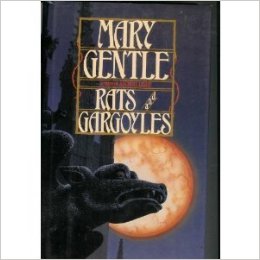
3. White Crow Sequence by Mary Gentle. First published in the UK by Bantam in 1990, it's not easy to find a paper version of these books in the US, aside from used books. Kindle editions of the series (Rats and Gargoyles, The Architecture of Desire, Left to His Own Devices, and White Crow).

This story is about Valentine the White Crow, a scholar-soldier who has fled from her suitor to a vast city at the centre of the world. The city's humans are ruled by an aristocracy of humanoid rats, which are themselves subject to immensely powerful gods who mostly sleep but are growing restless. Aided by various allies, Valentine must face the gods, defuse the conflict between humans and rats - and decide how she really feels about her suitor. Gentle writes beautifully, and her world and story are far from run-of-the-mill fantasy.

4. Jack Whyte's Dream of Eagles series, six books in all. Published between 1992 and 2005 by Forge books. It's the authors take on the Camelot legend. It's sometimes billed as historical fiction, but falls more into historical fantasy. He's a wonderful writer with a fabulous command of language and a penchant for researching to the nth degree. Want to know how to forge a sword using Dark Ages techniques? He's got it.

The series starts with the first person account of a character named Pubilus Varrus as he retells his own history and that of the Roman withdrawal from Britain, but new characters narrate the later books in the series, which ends with the fall of Camelot.

5. The Witcher Series by Andrzej Sapkowski. Not actually novels, the first book in this series was originally published as a collection of five short stories by Wiedźmin, in 1990. Four of the five have since been translated from Polish released in an English-language edition, The Last Wish in 2008. Other story collections in the series include The Blood of Elves, Sword of Destiny, and Baptism of Fire.

Many Americans were introduced to Sapkowski's world and character via the video games by this name. The stories center around the character of Geralt, a monster hunter struggling to maintain his own ethics while operating in a very "gray" universe that should appeal to people who like darker fantasy. The stories are very influenced by the legends and mythology of Eastern Europe and are filled with subtle humor.

6. Lighthouse Duology (Flesh and Spirit and Breath and Bone) by Carol Berg, published in 2008, 2009 by Roc books. This story takes place in a fairly typical early-renaissance sans gunpowder fantasy world, but the writing and characterization are phenomenal in my opinion. The protagonist is a rebellious mage who has been hiding from his family for more than a decade, which is a big deal, because in this world, magi are pampered chattel, controlled by their families and expected to live by rigid set of rules. His situation is complicated by a strange malady that's afflicted him since boyhood, which he self medicates with a forbidden magical ritual that is as addictive as it is agonizing.

The story has a slower start than is typical for modern fantasy, but the author introduces information about the world and the protagonist's situation in a way that keeps the reader guessing until the end. I think it should appeal to fans of writers like Robin Hobb, but it has a tone and style that's all its own.

7. The Book of Words Trilogy by J.V. Jones (The Baker's Boy, A Man Betrayed, Master and Fool). Published by Aspect Books in 1995-1996. The story centers on the adventures of a young woman who refuses to be a pawn in a political marriage and an apprentice baker who has powerful but uncontrolled magical abilities, and it incorporates many familiar fantasy tropes--evil twins, scheming sorcerers, and idealistic knights. But the world building, dialog, and intrigue elevate it beyond run of the mill fantasy. A fun read. The paper book appears to be out of print, but it's still available as a kindle edition.


 8. Tamir Triad by Lynn Flewelling (The Bone Doll's Twin, Hidden Warrior, The Oracle's Queen). These novels take place in the same world (in the land of Skala) as her long-running Nightrunner series, but centuries earlier. They tell the story of Tamir, Skala's greatest Queen, who was magically disguised as a boy at birth in order to hide her from her Usurping uncle. Although the novel uses "prophecy" and "chosen one" tropes, it handles them an interesting perspective--the cost of assuring that they come to fruition.

Though there are several viewpoint characters, Flewelling focuses on the character of "Tobin," who is a shy, lonely, and somewhat peculiar boy who is haunted by the ghost of his twin brother. Flewelling writes compelling and fascinating characters, and the ones in this book have stayed with me longer than most. The main flaw (one I didn't not think so much about the first time I read it), is she missed an opportunity to explore the issues faced by transgender children and teens in more depth.


9. Barry Hughart.  The Bridge of Birds, Del Rey, 1984.  It's a novel of ancient China that never was - but ought to have been.  There are two sequels ( Eight Skilled Gentlemen and The Story of The Stone), but this novel stands alone with no trouble at all.  When the children of his village are afflicted with a mysterious plague, Number Ten Ox heads to the city and recruits a sage to help find a cure, and together they go on a quest. Along the way, they discover they are stuck in the middle of a plot by the Heavenly Emperor of Jade himself.

The book is written in a lyrical, fairy tale style that should delight lovers of classics like The Princess Bride and The Last Unicorn.

10. A Crown of Stars Series by Kate Elliott: This seven book series (starting with King's Dragon) was published between 1997-2006 by DAW books. It is set in the fictitious land of Novaria, and story follows the stories of two young adults, Alain and Liath, as they are drawn into the war that starts when their home is invaded by an inhuman race called the Eika, who had nearly destroyed the world more than 2000 years before.

The author based her world and cultures on real-world medieval kingdoms. The excellent writing and epic scale of the conflict should appeal to fans of Tolkien and George RR Martin.


11. The Witch World series by Andre Norton (first novel Witch World, 1963). Andre Norton was a brilliant writer of both SF and F (the first woman to be awarded the SFWA's Damon night Memorial Grand Master status). and for reasons unknown, she seems to have fallen off the cultural radar in SF and F circles and her books are rarely included on the lists of classics. It's possibly because she was such a prolific writer that no one book or series stands above the others. She was a consummate world builder who often melded SF and F elements. This could also be a reason why her work is often overlooked--people aren't always sure where to categorize it. She also was one of the first speculative fiction writers to include LGBT characters in her work.

Magic is considered to be the sole property of women in this world, and witches lose their powers if they have sex, but the male protagonist has some magical ability, and when he marries a witch woman, both their powers are amplified. This creates some problems with the society's rather conservative ruling caste.

The next installment in this series is available here: http://doggedlywriting.blogspot.com/2015/09/more-forgotten-fantasy-classics-with.html


Thursday, September 25, 2014

Sighs, Nods, and Shrugs: Those annoying Little (Literary) Tics


I teach college biology. One of the many perks of my job is that it provides me ample opportunities to observe human behavior in all its glorious, and not so glorious, variety.
My husband also teaches, so we sometimes share stories about amusing things that happen in our classes (in ways that respect the privacy of all parties involved of course). One thing we've both noticed is that every class seems to have a mad sigher--a student who emits theatrical sighs when the instructor announces a quiz or homework, changes topics in lecture, misspeaks and corrects themselves, or when another student asks a question.

Needless to say, it's a noticeable mannerism. It's something that calls attention to itself. And while everyone sighs from time to time, some people do it more (and do it more loudly) than others.
Mannerisms are an important part of character building in fiction. Some characters will sigh, nod, blink, shrug etc. more than others. This is fine if it's intentional, but we often don't even realize it. Simple, everyday gestures can become mindless insertions.

So how many times can a character nod before readers think herhead may fall off? How many times can a writer mention quirked or raised eyebrows before they start to resemble great fuzzy caterpillars that may escape and attach themselves to the wainscotting?

Writing instructors and editors often enjoin us to be more mindful of stock gestures. I've even run across blogs that suggest that you only get five or six nods per manuscript. While I agree that excessive use of these gestures can become annoying, I got to thinking. Why five or six? What's magical about that number? And do all  successful and popular writers (or their editors) follow this advice?


I have both a nook and an ipad, so I've become an avid consumer of e-books. One thing these devices allow me to do is to conduct word searches. So I thought I'd do a little informal experiment and count the number of uses of some of these "go to" words in some of the books in my e-library. My reading is heavily weighted towards fantasy and SF, so all the titles save one fall into this category.

The words I searched for were: sigh, nod, shrug, grin, frown, eyebrow, gritted (in the context of teeth), groan. I didn't look at specific context, though I did toss incidents that were embedded in unrelated words or not used in the description of a character, and I considered all tenses of these words.

The books I examined were: The Last Argument of Kings, by Abercrombie; Promise of Blood, by McClellan; Fool's Assassin, by Hobb; Ancillary Justice, by Leckie; Cold Magic, by Elliot; King Rat, by Meiville, Old Man's War, by Scalzi, The Thousand Names, by Wexler; Havemercy, by Jones and Bennett; Colours in the Steel, by Parker; The Hundred Thousand Kingdoms, by Jemisin; Oryx and Crake by Atwood; Foreigner by Cherryh; Fade to Black by Knight; and The Lies of Locke Lamorra by Lynch.
  
Obviously, I can make no claim about how typical these are for their genre. One interesting thing I noticed is that the three SF novels on the list (Foreigner, Ancillary Justice, and Old Man's War) were all below the overall average in their usage for all of the words in question, as was the one book on the list by a writer who could be termed  "literary" (Oryx and Crake). The sample size was not large enough to do meaningful statistical analysis, of course.

What I did discover, though, was that while there was an incredible amount of variety between authors. And most of these words were used more than five times, on average. Of all of them, nod was the most popular, averaging over 60 uses per book, ranging from a low of 7 uses (Cherryh) and a high of 179 uses (Wexler). The largest single word use in one book, however, was frown, with a total of 208 uses in Abercrombie's book. Tooth gritting was the least popular overall, averaging 4.5 uses per book (and ranging from 0-28).


Every single one of these novels had at least one mannerism that was mentioned seventeen times or more.

After I did this gesticular bean counting, I went through my own manuscript and discovered that my own characters rarely grit their teeth or groan, but they seem to nod (78 incidents) and grin (60 incidents) more than the overall average for the novels I sampled.

So, what does this mean? Are uses of stock phrases like "nodded" and "shrugged" the kiss of death to a manuscript? Clearly not, since some highly successful writers make heavy use of them. Is there some predetermined number that represents a tipping point in a given novel? If there is, it's clearly much higher than five or six. But I'd also argue this doesn't means a writer should be oblivious to their use of these words.

One thing to consider is that some words also call more attention to themselves than others. Raised eyebrows and gritted teeth were mentioned less frequently overall, and probably for good reason.

In contrast, I think that some of the more common stock phrases, like nodded, grinned, frowned, and shrugged can be nearly invisible to readers, assuming they're spaced out reasonably well. Still, it certainly won't hurt anything to ask oneself whether or not the description is really needed, and if it is, whether or not there might be a way to make the gesture more evocative.

Also, are all the characters in a novel using all the various gestures equally, or is one more likely to, say, grit her teeth, while another is more likely to sigh like a forlorn maiden? Trademark gestures can be an aspect of characterization, but it doesn't take a huge number of repetitions to get across that a person is an inveterate sigher, or nodder, or shrugger.

A writer can reinforce that a repeated gesture is part of a character's mannerisms by having the other characters in the story notice them, especially if they have the potential to be irritating. It can be amusing to have one character call another out on it. The character can (if we spend time in their point of view) become self-conscious and worry whether they're doing it too often.

So are there any repeated actions or mannerisms you find irritating in a novel, or are there any you find you have to watch in your own writing?

Sunday, September 14, 2014

Fifteen Authors Who Have Influenced Me Greatly


There are various lists making the rounds lately, most notably the ten books that have stayed with me lists. I have one of those, but it occurred to me that some of my favorite authors are not on the list, because some of them wrote series where it is impossible to ferret out which book was the most influential. And of course, there are some stand-alone books out there too (To Kill a Mockingbird comes to mind) where the authors did not go on to write more.

But my favorite genres by far are fantasy and SF, and authors of these genres tend to write series or create universes that pull their readers back time and time again. So I decided to list my favorites. But then I got to thinking. Should I limit my selections to books that I've read as adults only, or only to adult books? Should I have only SFF books? Should I make an effort to include some classics that I didn't actually like very much, even though they've probably influenced me and everyone else who grew up when I did speaking English as their sole or primary language? I'm humbled by the prevalence of classics that are not remotely contemporary, or even SF or F on most of my writer friend's favorites lists. Makes me feel like an imposter.

But in the end, I have to be true to my own perceptions. I ended up with fifteen authors, not ten. And even so, there are some favorites I have left off.

One sobering thing for me is the lack of diversity on this list. Of my fifteen, only two are writers who are not white. Ten out of fifteen are women, which is rather biased towards one gender. But given the lean that most people's lists have towards men, I don't feel too bad there. I'm not sure about the sexual orientation of most of these writers. Five of these writers are/were British, Nine are/were American, and one was an American who adopted Ireland as her permanent home. I suppose this bias is understandable, given that I am white, English-speaking, heterosexual, cis-gendered, female, and American. I'm going to have easy access (and relate to) to more books by people who are like me in some ways at least. But still, I want to do a better job of reading books by people who come from different cultures than I do.

1. JRR Tolkien. I think this is the book that really made me fall in love with fantasy. I don't seek to emulate Tolkien's style, but I've probably re-read The Hobbit and LoTR more than any other novels.

2. C.J. Cherryh. One of the unsung SF greats in my opinion. She was and is a master at weaving intricate worlds and cultures, and she is one of the people who pioneered the use of a more "limited" point of view in SF. When she started writing, many SFF writers felt you "had" to lapse into telly omniscient from time to time, because the reader wouldn't "get" the world building otherwise. She has a special talent for immersing you in the perceptions of a character and for making their reality yours. I think she's had a pretty strong influence on me stylistically.

3. Ursula K. Le Guin. She also had/has a flare for world building and a simple, yet lyrical way with language. She proved to me that you don't need purple prose to paint a clear picture of a world and character. And she deserves kudos for writing fantasy where the default race wasn't white and for exploring our assumptions about gender.

4. Alice Walker. She did such an amazing job of bringing me inside the heads of characters who have lived very different lives than I have, yet to whom I can relate so utterly and completely. She has a talent for writing in a very colloquial voice without making it inaccessible or distracting. I cared deeply for Celie and Shug in particular, but all of her characters were real people to me.

5. Robin Hobb. There's an uneven and somewhat bumpy ride here (I liked her Shamen Trilogy, and Rain Wilds books, but they weren't as good to me as her earlier titles), but her Farseer and Tawny man books moved me deeply, and her latest Fitz and Fool book has pulled me back into that world with a vengeance. She doesn't get much credit for this, but her character of the Fool was definitely outside of the binary concept of gender. She just handled it much more subtly than some writers have. She made me fall in love with modern fantasy and showed me that broken, flawed people make the most compelling characters. There's probably a bit of Fitz in my current protagonist, for all that he's a very different person in a very different situation.

6. James Herriot. I just loved his books growing up, and I've read and reread them over the years. He's one of those rare authors who really felt like a friend, even though I'd never met him. Last time I was in the UK, I was able to go to the Herriot Museum, which is in the house where he (real name Alf Wight) really practiced with Donald and Brian Sinclair (aka Seigfried and Tristan Farnon)  for many years. It was just so cool to see the places I'd read about coming to life.

7. William Shakespeare. Regardless of how you feel about his plays, he is probably the greatest and most versatile writer the English Language has produced. His work resonates even today, and it's impossible not to be influenced by it.

8. Judy Blume. I loved her books as a pre teen and teen. She portrayed issues that I may or may not have been able to relate to initially, but once I read about them, I couldn't help but do so. They made me into a more empathetic human being, and her book Forever, which portrayed a teen aged girl having her first sexual relationship as if it were not (gasp) a terrible thing had a profound influence on my own attitude about sex in general and my own resolve to never have unprotected sex unless I wanted to become a parent.

9. K.M. Peyton. Another YA fiction writer from the 70s. Her stories about the horse-crazy Ruth Hollis pulled me in, but she had a number of other stories too, most notably about Pennington, a very troubled musical prodigy, and her Flambards books (set around the time of WWI). She didn't talk down to teens at all, but she also didn't sugar coat the consequences of bad decisions or promise her readers that every good decision, personal victory, (or love affair) would end in a happily ever after.

10. Micheal Moorcock. I don't know why his Elric stories have stayed with me the way they have. I didn't especially like Elric, and his whole situation was rather depressing. But darn it if some of his plight doesn't carry over into my current work (though I really hope I can have a happier ending).

11. Amy Tan. I love her books. Her characters are relatable, even when I am angry at them for their flaws and foibles. I think my favorite was The Hundred Secret Senses, but they've all spoken to me in one way or another.

12. Connie Willis. Her stories set in the universe of her time-travelling Oxford Historians are my favorite, but Passage and Bellwether also pulled me in. She has a knack for making me laugh and cry at the same time, for weaving everyday frustrations and absurdities into the darkest stories. And she never fails to remind me that the biggest heroes often go unnoticed.

13. Margaret Atwood. Lovely writing, memorable characters, fascinating, non-linear approaches to narrative that would be too unexpected and unintuitive for me to like at the hands of anyone else. I don't think she's ever written a dud. I don't think I'd ever in a million years try to write the way she does. But I've been enriched by her prose.

14. Anne McCaffrey. Her work  helped pull me into modern SF as well. She gets dinged a lot for (possibly) flogging a successful series into the ground, and in spite of her many awards and huge following, she doesn't seem to get included on many lists of masters or all-time greats. And there was that stupid "tent peg" comment that reminded me how someone can be admirable in so many ways, yet hurtfully wrong in others. But I have read and re-read her Dragonrider books over the years, and they've stuck with me in ways many other series have not.

15. David Brin. I loved his Uplft books, and I have wished so much that he would return to that universe. If I wrote SF, I'd probably be shooting for something in between him and Cherryh in terms of style and approach.