Showing posts with label Book Recommendations. Show all posts

Sunday, March 20, 2016

Fantasy Novels I've Read Recently


We're already almost a quarter of a way through 2016, so I wanted to list some of the books I've read and enjoyed over the past two months or so. The last two, Updraft and Uprooted, were published in 2015 and are eligible for the 2016 Hugo Awards. If you're eligible to nominate for the Hugos this year (the March 31 deadline is rapidly approaching), I recommend you give these a read if you haven't already. I'd never tell anyone else what they should like, but I think both of these books are Hugo Worthy. 

The other titles on this list are excellent too, and I strongly recommend them.

Cover by Todd Lockwood
A Natural History of Dragons by Marie Brennan. Tor 2013. I put off reading this book, because I thought it was going to be a fake reference book or something, but it's actually a delightful story, written memoir style, about Isabel, a woman living in a quasi-Victorian world that is very similar to our own, except that it has dragons. Fantasy elements are slight, and the dragons portrayed are very naturalistic--intelligent animals. The book starts with a the protagonist's childhood memories of dissecting a dead dove (and getting punished for it) and collecting specimens, and nearly being killed by a creature called a "wolf drake."

After Isabel marries a man with similar interests, she manages to get them a berth on a research trip to a mountainous country to study a breed of dragons called "rock wyrms." The narration is alive with voice and the protagonist's wry wit, and the tale kept me riveted until the end. I've just read the sequel, entitled The Tropic of Serpents, and it's every bit as good. These books definitely a change of pace from the style of epic fantasy I usually prefer, but I enjoyed them thoroughly and plan on reading the rest of the books in this series.

Cover by John Jude Palencar
Broken Blade by Kelly McCullough. Ace books, 2011. Aral, the protagonist, is a former assassin priest of a goddess of justice who has been murdered by her fellow deities. Robbed of both faith and identity, he's a tattered remnant of his former self who works as a blade for hire between bouts of drinking. The only thing keeping him sane is Tris, his shadow-dragon familiar. I'm a sucker for "hot mess" characters and for stories with animal companions and magical familiars, so this premise attracted my interest. The author's wonderful deconstruction of the "trouble walked in wearing a red dress" trope in the opening scene drew me in.

The book was entertaining, cleanly written, and well paced, and I liked the pov character's voice. If there's a flaw, it's that the author was a bit light on environmental and character detail for my tastes. I tend to favor leanness here, but I couldn't really visualize the kinds of clothes they were wearing, the style of architecture, and the appearance, coloring, racial characteristics of the characters, so my mind kept defaulting to "pseudo-medieval, European with everyone white," but I don't know if this was the author's intent. It's a small thing, though. This is the first book in a series, and I look forward to reading the next one soon.

Cover by Kris Kamikakushi
"Hunting Monsters" by S.L. Huang. Book Smugglers Publishing 2014. This is a short story, published as a stand alone. It's available as an e-book on Amazon, and Barnes and Noble online. Set in a fairy tale world (incorporating elements from "Little Red Riding Hood," "Beauty and the Beast" and other classic tales), this is a wonderful example of how a good writer can layer world building and history into a short story. Like many good fairy tale protagonists, the main character lives in a small cabin in the woods. On her fifteenth birthday, her mother is arrested for the murder of a grundwirgen, creatures that resemble beasts but are people in the eyes of the law.

The writing in this story is very good. I've always had a weakness for retellings and reinterpretations of fairy tales, and this one was a page turner.

Cover by Steven Martiniere
Updraft by Fran Wilde. Tor Books, 2015. This has to be one of the most unique speculative fiction settings I've ever encountered. Set in a world where people live in bone towers (which appear to grow from somewhere below the clouds) and fly on silk wings, it follows Kirit, a protagonist who wants to become a trader like her mother, but is manipulated into becoming one of the singers who protects her city safe from attacks by invisible predators.

As a singer in training, Kirit stumbles across multiple layers of intrigue and discovers a truth that could change her world forever. This story is fascinating and well written. If it has a fault, its that the alien setting and culture, along with the highly immersive approach to world building (it's told in a very "here and now" style of first person with not an info dump in sight) makes it hard to understand and relate to the characters' motives at times. This may be a fault in me as a reader and not the book itself, however, and I found myself increasingly pulled in as I read. I look forward to the sequel, which is coming out later this year.

Cover by Scott McKowen
Uprooted by Naomi Novik. Del Rey books, 2015. This story draws from Polish fairy tales the author remembers from her childhood, and it's beautifully written. Set in a village where a 17-year-old girl is taken every ten years by the wizard who protects it from encroachment by a cursed wood, the story has a strong female protagonist who is driven by her love for her best friend. The world is vividly drawn and simultaneously familiar and relatable yet fresh with many unexpected twists. I liked the way the author was able to create a sense of menace while remaining basically optimistic about human nature. Kept me guessing until the end.

This is a stand alone-novel, something that's probably too rare in fantasy. I love series and I understand why writers and readers of fantasy like sweeping epics and want to return to their favorite worlds for tale after tale, but it's also pleasant to be able to lose oneself in a book and to reach the end without feeling like there are plot threads that still need to be tied off.

Sunday, January 10, 2016

Some Fun Fantasy Reads From 2015


Swords and Scoundrels, by Julia Knight. Published by Orbit Books.

This story centers around Kacha and Vocho, a sister and brother who have been exiled from the Duelists Guild because Vocho killed a man he had been hired to protect. They're making ends meet as highwaymen until they rob the wrong carriage and are plunged into a conspiracy. This story is set in a flintlock and Rapier world where people worship a clockwork god and live in a city where the buildings rearrange themselves at set intervals. It's a really fun read, filled with plot twists, conspiracies, and divided loyalties that will keep the reader guessing until the end. The tale continues in the sequels, Legends and Liars and Warlords and Wastrels.

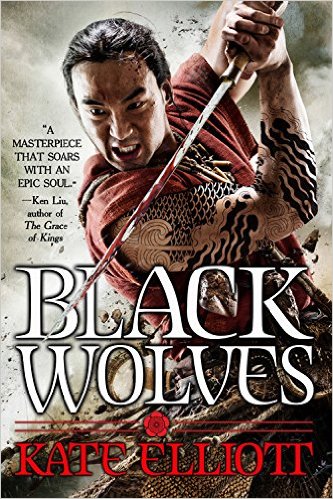
Black Wolves, by Kate Elliot. Published by Orbit Books.

Set in the same universe as her Spirit Gate Trilogy,  this novel stands alone and does an excellent job of pulling a new reader into the author's rich and complex world, which centers around a kingdom called The Hundred. It has several pov characters, but the connections between these characters keep the story from meandering the way some fantasy epics do. It's not easy to give a thumbnail sketch of this book, but it centers around the power struggle between the current King of the Hundred, his wives, their sons, and their various allies. A major theme in this book is change within a society and conflict between cultures. And don't let the cover and blurbs that focus on male characters fool you. Three out of five of the protagonists are women, and the author does an excellent job of portraying women, even ones who are from cultures that cloister them, as major players with agency and goals. I'm looking forward to the next installation.

Dust and Light, by Carol Berg. Published by Roc Books.

Set in the same universe as her Lighthouse duology, this book book can be easily read by someone unfamiliar with Flesh and Spirit and Breath and Bone (though those are well worth reading as well). Magic is hereditary in Berg's world, and sorcerers occupy a privileged, yet constrained position, as the use of their magic is controlled and contracted by the restrictive pureblood registry. The story centers around young Lucian de Remeni-Masson, a pureblood sorcerer who has been stripped of half his magic for unseemly conduct with an "ordinary." He and his sister are struggling to survive after the rest of their family was murdered by savage Harrowers. When he's forced to accept the contract of Bastien, master of the local dead house, Lucien's talent for creating portraits that tell the truth about the dead lands him in a world of trouble.  Like with Berg's earlier books, the narrative is in first person and she does a fine job of portraying the voice and personality of her protagonist and making the reader care about him and his problems. The second book in this duo, Ash and Silver, was released in December, and I plan on reading it soon.

Finn Fancy Necromancy, by Randy Henderson. Published by Tor Books.

I don't read a lot of urban fantasy, but this author came to my attention when I attended the Cascade Writer's Conference in 2014. The protagonist, Finn Gramaraye, was framed for the crime of dark necromancy 25 years ago, and the story begins as he ends his exile from his body to the Other Side (an ethereal place of existence populated by the fey) and returns to his body, which has been helpfully occupied by a changeling to keep it alive during Finn's sentence, in the mortal realm. But the person who got him in trouble last time doesn't want him back in the mortal world, and Finn, with the help of his eccentric family, are going to have to find out what really happened and prove it to the Arcane Enforcers. The story has got a great voice and plenty of dark humor. The next book in the series, Bigfootloose and Finn Fancy Free, is coming out in February.

The Waking Engine, by David Eddison. Published by Tor Books.

This novel was published in 2014, but I didn't read it until last year. As someone who is a fan of classic fantasy, I wasn't sure if this book would appeal to me, but the author did a good job of drawing me into his basic premise, which is somewhat similar to that of the Riverworld series. When you die, you awaken in another world, where you live until you die again. Rinse, repeat. Until you awaken in the City Unspoken, which holds the gateway to true death. But Cooper is an anomaly. He seems to have skipped to the end of the line, and he awakens in the City Unspoken without ever having died at all (his navel from his "first birth" is still intact). He may be the only one who can solve a problem that threatens to unravel the metaverse: the gateway to true death seems to be malfunctioning and the Undying City is thronged with people who have nowhere else to go and are repeatedly dying and being reborn in the same place. Cooper is no kick-butt protagonist; he's more like an Arthur Dent--confused, bemused, and in over his head--but he never lost my sympathy. The author also made good use of the omniscient pov, something I haven't run across much in fantasy lately.


Monday, September 21, 2015

More Forgotten Fantasy Classics (with a couple of newer series you really need to read).


This is a continuation of my forgotten classics series (the first installment is linked here) , and it includes some more fantasy novels and series that seem to have fallen (undeservedly, in my opinion) off the cultural radar in recent years. I've tossed in some newer fantasy novels that I think are very good as well. If these entries lead anyone to read and enjoys a book or author they wouldn't otherwise have heard about, then I'll be very pleased.

1. Dragon Prince series (Dragon Prince, The Star Scroll, Sunrunner's Fire) by Melanie Rawn. Published between 1988-1990 by DAW books, these books were well reviewed and popular, and set the stage for a host of intrigue-heavy fantasy with large casts of characters who fall along a broad spectrum in terms of morality.

The story's desert environment doesn't feel like a quasi-Europe, the story has a lot of action, and while gender roles are pretty traditional, the women have agency and goals of their own and aren't just there for the men. The story even shows some of the men through a female gaze, which was unusual back in the 80s, even for female authors. And Rawn does a better job than most authors of her era at exploring the implication of living in a world with large, intelligent predators.

2. The Watergivers Trilogy (The Last Stormlord, Stormlord Rising, Stormlord's exile) by Glenda Larke. The author is Australian, which might be why these books aren't as well known in the US as they should be. They were published by Ace Books in the US between 2010-2011. Set in a secondary world, these novels focus on the power struggles within a society that relies on water-manipulating magic for survival. The core conflict centers around a base born boy who may be the last person alive with this talent and on his attempts to master his unreliable magic and to resist being manipulated.

The story is set in a culture that doesn't feel like it's based on anything that's simply lifted whole-cloth from our world, and the story's two main protagonists are both people of color. There are several pov characters, including some interesting women, and some LGBTQ characters, but it is not in any way an issue story.

3. Chosen of the Changeling duology (The Waterborn and The Blackgod) by Gregory Keyes. Published in 1996-1997, they've recently been reissued for kindle. The story focuses on Hezhi, a princess from a magical family. It contains many traditional fantasy elements, but the author's attention to world-building detail and his knowledge of linguistics and fencing, give this story a depth and authenticity many lack.

4. Rojan Dizon Trilogy (Fade to Black, Before the Fall, Last to Rise) by Francis Knight, published in 2013-2014 by Orbit books. A secondary world fantasy noire, the story's setting, the magic tech city of Mahala, is a bit reminiscent of Blade Runner. The city is ruled by priests and has a rigidly hierarchal class system. Among its many themes story explores outsider issues and the disconnect between the religion practiced by the privileged wealthy and the impoverished masses.

The reluctant hero (a snarky womanizer who must hide his magical talent) is evocative of many well-loved UF protagonists, but his costly magic and social ineptitude keeps him from ever approaching the wish fulfillment archetype. The pace is brisk and the twisty, turning plot keeps the reader wondering how the story will end.

5. Wayfarer Redemption series by Sarah Douglas. This consists of six books (Wayfarer Redemption, Starman, Sinner, Pilgrim, Crusader) that were published in the late 1990s by Harper. They are very popular in the author's home country of Australia, but they've never gotten the attention they deserve in the US. Unfortunately, Ms. Douglass passed away in 2011, which might be another reason they haven't been promoted as aggressively as they should be over here.

The novels meld elements of SF and fantasy, as they incorporate space travel, stargates, and demons known as Timekeepers, but it takes place in a pastoral, non industrial world When a plague of monsters threaten their homeland, a noblewoman and a military leader must learn the truth about the history of their world.

6. Villains by Necessity by Eve Forward. This stand-alone book was published in 1996 by Tom Doherty Associates. This humorous novel subverts many familiar tropes, as it centers around a band of traditional fantasy villains (an assassin, a thief, an evil sorceress, and a dark knight) who must save the world from a fatal imbalance after evil is banished.

As far as I can tell, Forward has only written one other novel (by this name, at least), Animist, which read like the start to a promising series that never materialized. It's a shame, because she is a good writer who has a knack for twisting familiar tropes.

7. In a similar vein, though written with a different style and execution, Grunts, by Mary Gentle. First published in the UK in 1992 by Bantam Press, it was reprinted in 1995 by Roc books. This satirical book takes place in a cliche-ridden fantasy world based on the basic D&D mode. The plot revolves around a band of orcs preparing for the last battle between good and evil, one they're destined to lose. Things change when they find an artifact that turns them mentally into 20th century US soldiers.

The book is filled with camp and over-the-top humor and references to tropes that should appeal to anyone who ever played fantasy games or simply got tired of tired rip offs of JRR Tolkien's works.

8. Vows and Honor trilogy (Oathbound, Oathbreakers, Oathblood) by Mercedes Lackey published in novel form between 1988-1998. These books tell the tale of Tarma and Kethry, who make a cameo appearance in at least one of her Heralds of Valdemar books. These books are unusual in fantasy, because they focus on the friendship between two female adventurers who are seeking to avenge the slaughter of Tarma's clan. It's fun to see a good old fashioned "mismatched" buddy S&S-style adventure fantasy told from a female perspective. And the acerbic "Need" is probably the coolest take I've seen on the sentient sword trope.


8. Alan Garner's the Weirdstone of Brisingamen is considered to be a children's novel, but it has plenty to offer adult fantasy fans too. It was well-received when it first came out, but fell into relative obscurity, perhaps because the author decided he didn't feel it was a very good book.

First published in 1960, this novel is based partially on a Cheshire legend tells the story of two children, Colin and Susan, who are staying with some friends while their parents are overseas. Susan owns a bracelet that contains the weirdstone of the title. The minions of the dark spirit Nastrond who, centuries before, had been defeated and banished by a powerful king, wants this item back.

9. Deed of Paksenarrion trilogy (Sheepfarmer's Daughter, Divided Allegiance, Oath of Gold), published in 1988-1989, were the first volumes in the Paksennarion series. It is fairly classic high fantasy, set in a quasi medieval world with elves, dwarves, and paladins. The story follows the character of Paks as she joins the army to flee an arranged marriage. This may be why it's faded from view in spite of being popular in its day--the Tolkien and D&D-inspired high fantasy of the 70s and 80s has largely run its course. But the excellent characterization and well-developed religious themes (unusual in a genre where characters often have the mindset of citizens of 20th century secular democracies) make it stand out from its peers. The author's military experience shows as well.

10. The Morgaine Cycle (The Gates of Ivrel, The Well of Shiuan, The Fires of Azeroth, Exile's Gate) by CJ Cherryh. Published by DAW books between 1978-1988. I discovered these on my parents' bookshelves when I was a kid, and they helped foster my lifelong love for speculative fiction. Strictly speaking, these are SF, as the author has stated that they are set in the same universe as her Union-Alliance novels. But the stories have a sword and sorcery/quest fantasy feel, and the characters travel on horseback for most of the series. CJ Cherryh is one of my favorite authors, and she was one of the first SFF writers to employ a closer, character-focused narrative style in SF and F.

Though Morgaine is the plot-driving character, the story is told through the narrative perspective of Vanye, a disgraced bastard. Outcast for accidentally killing his brother, he accepts food and shelter from Morgaine, and is bound to assist her in her quest to close the travel gates left behind by a star faring empire. The Gate of Ivrel is Cherryh's first novel, but the world building and characterization are phenomenal. Why these don't end up on any of those "best and influential SFF lists" is beyond me.

11. Poul Anderson's The Broken Sword. Published in 1954 by Abelard-Schuman (currently available in the US for Kindle from Open Road Media Sci-Fi & Fantasy. This is another fantasy novel  remember finding on my parent's bookshelves when I was a kid. Michael Moorcock declared The Broken Sword superior to Tolkien (though that's not saying a lot, since Moorcock isn't the biggest Tolkien fan in the universe), calling it “a fast-paced doom-drenched tragedy in which human heroism, love and ambition, manipulated by amoral gods, elves and trolls, led inevitably to tragic consequences.”

It was influenced by H. Rider Haggard’s 1891 Viking adventure The Saga of Eric Brighteyes. It's definitely worth a read if you'd like to spend some time with elves that aren't at all like the ones from most role playing games. It's a product of its time in that it's somewhat sexist, but still a good read.

Wednesday, September 2, 2015

Some Great Fantasy Novels or Series That Rarely Make Those "Must Read" Lists


The web is a great place for learning about books and authors, but sometimes it seems like there's a "rich get richer" element to the various "must read" and "best of" or "top" lists that get linked on various sites. The same books and authors we've heard of already tend to come up. So I thought I'd toss some books out there that were either well-liked in their day but have fallen off the cultural radar or had a cult following of sorts but never made it into the fantasy "mainstream" (whatever that might be for the genre). In order to keep this from being just a list of my own unsung favorites, I've been picking the brains of my fantasy-loving friends as well, and some of their suggestions are included. This is not a complete list by any means, and I've got many more titles I'd like to discuss, maybe in a future entry.


1. Deryni Rising and sequels, by Katherine Kurtz. Published by Ballantine Books in 1970, reissued by Ace books in 2004. This was the first book in her Deryni series, which was fairly popular with fantasy geeks in the 70s and early 80s, but even though she is credited with influencing authors like Guy Gavriel Kay and George RR Martin, this novel and series are rarely included on "recommended" or "Must Read" lists today.

Set in the fictitious kingdom of Gwynedd, the fantasy society Kurtz created is much closer to a historically accurate medieval setting than is typical in epic fantasy. The stories focus heavily on magic, intrigue, and politics as Prince Kelson seeks to learn the truth about the not-so-accidental death of his father, his own magical heritage, and to put down the plot to steal his throne by sorceress and pretender Carissa.

2. Tales of the Otori by Lian Hearn, Riverhead Books, 2003-2005. (Across the Nightengale Floor, Grass For His Pillow, Brilliance of the Moon). This story takes place in a world inspired by feudal Japan. The protagonist, Takeo, a member of a persecuted religious group, is nearly killed when his village is destroyed. He's saved by the Otori clan an falls into a world of intrigue, magic, and warfare.
This novel is actually fairly popular, but it doesn't seem to be well known in fantasy circles. It seems to be shelved with general fiction in bookstores, in spite of its magical elements and alternative world setting. The first book in the series takes an unusual approach to narrative viewpoint, with one point of view character being shown in first person, and the other in third

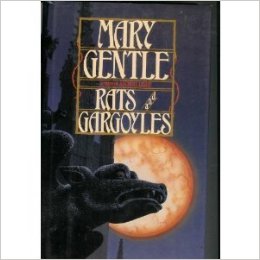
3. White Crow Sequence by Mary Gentle. First published in the UK by Bantam in 1990, it's not easy to find a paper version of these books in the US, aside from used books. Kindle editions of the series (Rats and Gargoyles, The Architecture of Desire, Left to His Own Devices, and White Crow).

This story is about Valentine the White Crow, a scholar-soldier who has fled from her suitor to a vast city at the centre of the world. The city's humans are ruled by an aristocracy of humanoid rats, which are themselves subject to immensely powerful gods who mostly sleep but are growing restless. Aided by various allies, Valentine must face the gods, defuse the conflict between humans and rats - and decide how she really feels about her suitor. Gentle writes beautifully, and her world and story are far from run-of-the-mill fantasy.

4. Jack Whyte's Dream of Eagles series, six books in all. Published between 1992 and 2005 by Forge books. It's the authors take on the Camelot legend. It's sometimes billed as historical fiction, but falls more into historical fantasy. He's a wonderful writer with a fabulous command of language and a penchant for researching to the nth degree. Want to know how to forge a sword using Dark Ages techniques? He's got it.

The series starts with the first person account of a character named Pubilus Varrus as he retells his own history and that of the Roman withdrawal from Britain, but new characters narrate the later books in the series, which ends with the fall of Camelot.

5. The Witcher Series by Andrzej Sapkowski. Not actually novels, the first book in this series was originally published as a collection of five short stories by Wiedźmin, in 1990. Four of the five have since been translated from Polish released in an English-language edition, The Last Wish in 2008. Other story collections in the series include The Blood of Elves, Sword of Destiny, and Baptism of Fire.

Many Americans were introduced to Sapkowski's world and character via the video games by this name. The stories center around the character of Geralt, a monster hunter struggling to maintain his own ethics while operating in a very "gray" universe that should appeal to people who like darker fantasy. The stories are very influenced by the legends and mythology of Eastern Europe and are filled with subtle humor.

6. Lighthouse Duology (Flesh and Spirit and Breath and Bone) by Carol Berg, published in 2008, 2009 by Roc books. This story takes place in a fairly typical early-renaissance sans gunpowder fantasy world, but the writing and characterization are phenomenal in my opinion. The protagonist is a rebellious mage who has been hiding from his family for more than a decade, which is a big deal, because in this world, magi are pampered chattel, controlled by their families and expected to live by rigid set of rules. His situation is complicated by a strange malady that's afflicted him since boyhood, which he self medicates with a forbidden magical ritual that is as addictive as it is agonizing.

The story has a slower start than is typical for modern fantasy, but the author introduces information about the world and the protagonist's situation in a way that keeps the reader guessing until the end. I think it should appeal to fans of writers like Robin Hobb, but it has a tone and style that's all its own.

7. The Book of Words Trilogy by J.V. Jones (The Baker's Boy, A Man Betrayed, Master and Fool). Published by Aspect Books in 1995-1996. The story centers on the adventures of a young woman who refuses to be a pawn in a political marriage and an apprentice baker who has powerful but uncontrolled magical abilities, and it incorporates many familiar fantasy tropes--evil twins, scheming sorcerers, and idealistic knights. But the world building, dialog, and intrigue elevate it beyond run of the mill fantasy. A fun read. The paper book appears to be out of print, but it's still available as a kindle edition.


 8. Tamir Triad by Lynn Flewelling (The Bone Doll's Twin, Hidden Warrior, The Oracle's Queen). These novels take place in the same world (in the land of Skala) as her long-running Nightrunner series, but centuries earlier. They tell the story of Tamir, Skala's greatest Queen, who was magically disguised as a boy at birth in order to hide her from her Usurping uncle. Although the novel uses "prophecy" and "chosen one" tropes, it handles them an interesting perspective--the cost of assuring that they come to fruition.

Though there are several viewpoint characters, Flewelling focuses on the character of "Tobin," who is a shy, lonely, and somewhat peculiar boy who is haunted by the ghost of his twin brother. Flewelling writes compelling and fascinating characters, and the ones in this book have stayed with me longer than most. The main flaw (one I didn't not think so much about the first time I read it), is she missed an opportunity to explore the issues faced by transgender children and teens in more depth.


9. Barry Hughart.  The Bridge of Birds, Del Rey, 1984.  It's a novel of ancient China that never was - but ought to have been.  There are two sequels ( Eight Skilled Gentlemen and The Story of The Stone), but this novel stands alone with no trouble at all.  When the children of his village are afflicted with a mysterious plague, Number Ten Ox heads to the city and recruits a sage to help find a cure, and together they go on a quest. Along the way, they discover they are stuck in the middle of a plot by the Heavenly Emperor of Jade himself.

The book is written in a lyrical, fairy tale style that should delight lovers of classics like The Princess Bride and The Last Unicorn.

10. A Crown of Stars Series by Kate Elliott: This seven book series (starting with King's Dragon) was published between 1997-2006 by DAW books. It is set in the fictitious land of Novaria, and story follows the stories of two young adults, Alain and Liath, as they are drawn into the war that starts when their home is invaded by an inhuman race called the Eika, who had nearly destroyed the world more than 2000 years before.

The author based her world and cultures on real-world medieval kingdoms. The excellent writing and epic scale of the conflict should appeal to fans of Tolkien and George RR Martin.


11. The Witch World series by Andre Norton (first novel Witch World, 1963). Andre Norton was a brilliant writer of both SF and F (the first woman to be awarded the SFWA's Damon night Memorial Grand Master status). and for reasons unknown, she seems to have fallen off the cultural radar in SF and F circles and her books are rarely included on the lists of classics. It's possibly because she was such a prolific writer that no one book or series stands above the others. She was a consummate world builder who often melded SF and F elements. This could also be a reason why her work is often overlooked--people aren't always sure where to categorize it. She also was one of the first speculative fiction writers to include LGBT characters in her work.

Magic is considered to be the sole property of women in this world, and witches lose their powers if they have sex, but the male protagonist has some magical ability, and when he marries a witch woman, both their powers are amplified. This creates some problems with the society's rather conservative ruling caste.

The next installment in this series is available here: http://doggedlywriting.blogspot.com/2015/09/more-forgotten-fantasy-classics-with.html


Saturday, May 2, 2015

Reading as a Writer

So many books, so little time
One thing about writing is that it really eats into one's reading time. I used to devour a good book in 2-3 days, because I'd sit for hours with my nose buried in it. But writing (and yes, the siren's song of social media) means that I don't have hours of free time to lose myself in novels. It's been a while since I got sucked into a book I couldn't put down until it was finished, and the last time I did (the book was Robin Hobb's Fool's Assassin, by the way), I felt guilty that I did no work on my writing for a couple of days.

Another issue is that I have a very long list of novels I "should" be reading. Instead of seeking out books by old favorites (like Robin Hobb), I'm trying to read newer secondary world fantasy, especially successful debuts and top sellers from the past few years. And of course, there are also those award winning novels, or classic novels that everyone and their brother is talking about or recommending yet somehow fell through the cracks of my own awareness until recently.

And oh, God, I need to be reading more short fiction too, so maybe I can get over the block that stops me from coming up with short story ideas more than once in a blue moon.

The problem is, when I'm doing something because you "should" be doing it, even when it's something you enjoy and the book in question is really good, I have a harder time staying focused on it. Especially when I've got a couple of new novels I'm trying to get cracking on.

I thought I'd toss out some of the things I've read (or been reading) recently, however, as well as some books that are on my ever-growing to-read list.

Books I've finished recently

Lascar's Dagger by Glenda Larke: I loved her Stormlords books, so I was excited to see she had something new out. Interesting characters and world, though I didn't get quite as drawn in as I did with her previous trilogy. It's a little more standard-issue fantasy, though the interplay between the main characters is intriguing.

Shards of Time by Lynn Flewelling: The last novel in her long-running Nightrunners series. I've been reading her work since the early 2000s (when I discovered the Tamir Triad), and I love her characters and world. Sad to see it end, though I thought this one was maybe a bit flatter than some of her previous books about Alec and Seregil. Ending a long-running series is hard, though.

Promise of Blood by Brian McClellan: A Gunpowder fantasy set in a society where the monarchy has just been overthrown. An unusual magic system and meddlesome gods (one with a penchant for cooking) adds a nice touch to this debut. The writing's a bit  klunky (as if the author couldn't quite decide if he wanted the pov to be omniscient or limited third), but it's a first novel. The dysfunctional, love-hate, father-son relationship between two of the main characters is fascinating as well.

The Thousand Names by Django Wexler: Another fantasy set in a society that feels like the late 1700s. Interesting world, though it feels like a lot of novel one is set up. Some nice surprises, and I like that the relationship between three female characters is important to the story. This is a fantasy debut, but I believe the author has published in other genres previously. A friend of mine from Cascade Writers says he's in her critique group and is a really nice guy, so I definitely wanted to give his book a read.

The Clockwork Dagger by Beth Cato: A debut steampunk novel by a writer I met at a workshop (Cascade Writers) three years ago. I don't read a lot of steampunk, but I enjoyed her setting, characterization and the romantic arc. Reminded me a bit of a Joan Aiken novel for grownups (I loved Joan Aiken as a child) Her protagonist is a healer, and I thought her healing system was really fascinating. Thankfully very different from mine.

Books I'm reading:

The Goblin Emperor by Katherine Addison: Just read first couple chapters. Looks to be a court intrigue fantasy stories, and I need to read more of those, since court intrigue figures heavily in my Umbral series, especially book 2 (which I'm working on now). Also, it's a Hugo contender, and I'm voting in the Hugos this year. The writing is really good and lyrical, though the pov (third person, pretty zoomed out with omniscient parts) is more distant than my preference.

Flesh and Spirit by Carol Berg: A few years old now, but I'm reading it because I discovered that the main character is addicted to a pain-based magic, which should be familiar to anyone who's been beta reading for me. The particulars are different, though her stories and characters are similar to mine in some ways--broken heroes with plenty of internal conflicts and flaws, and she puts them through hell. I like the first person narration and main character, though I'm halfway though, and so far, the story is a bit slow. It takes place in a monastery, and I'm only just getting a feel for the stakes. She's a fine writer, though who is very good at description and scene setting that doesn't break pov or bog the narrative down. It makes me sad that her work is often overlooked by people discussing good modern fantasy writers.

Mirror Empire by Kameron Hurley: About halfway through this one, and it's really intriguing. Different kind of world building. I wouldn't call it Grimdark, but it's definitely got a body count and its share of gray-scale characters. She tosses you into the world and culture with very little prompting, and you have to figure out what's going on as you read. Some people have commented that this is difficult to do, but I've been tracking things so far. The main issue I have with it is that the large number of pov characters makes it hard for me to follow or attach myself to any one story (a bit like Martin's work, though she sets things up differently, and I believe the different character arcs intersect more). Fantastic writing, and it's a shame it didn't net a Nebula or Hugo nomination this year.

Cold Fire by Kate Elliott: The second book in the Spiritwalker Trilogy, (first was Cold Magic, which I enjoyed). Sequels have been more on my back burner lately, but I want to get to this one. I enjoyed her world building and characterization in the first one. Also, the focus on a relationship between two female cousins is nice. So often, female characters are stranded in a sea of men in fantasy novels and don't seem to have any important friends or mentors who are women.

Dragon Soul by Jaida Jones and Danielle Bennett: Loved the first two books in this series, and I'm about halfway through this one. Hoping the boys find the remains of ol' Havemercy and get her going again.

The Dagger's Path by Glenda Larke: Sequel to Lascar's Dagger. Lots of cool stuff, and it appears that the main characters are traveling to the Va-Forsaken lands in spite of the best efforts of 2/3 of them. I've heard that the author modeled them after Malay, where she lived for a long time (and her husband is Malay also), and the setting is very well developed. The only thing I'm struggling with is the addition of two new new povs who have sort of taken over the portion of the story I'm on right now. They're likable and compelling, and I'm guessing their stories will interweave back into those of the three main characters from the previous book. I assume she's telling the story chronologically, so we're not getting anything on these other characters while they're uneventfully on a ship, but it's a bit disquieting, as if they've disappeared from the story. There's no perfect way to do a novel with multiple pov characters (and where the story takes place on different fronts) however.
 
Books I'm currently stalled out on, though I hope to plow through.

The Crimson Campaign by Brian McClellan: Sequel to Promise of Blood. Torn on this one. The increasing pathos of one of the pov characters (Taniel Two Shot) and his developing relationship with the enigmatic Ka Poel is interesting, but I'm not connecting well with Adamat this time around (he was less interesting to me than the other three povs in book one also). I can't put my finger on it, but the writing feels more distant and stilted with him, maybe because the author uses this character's proper name in almost every sentence and filters a lot, instead of trusting the reader to know that anything described in one of Adamat's chapters will be what Adamat sees, knows, hears, thinks or feels. I like the story and magic system, however, so I plan on getting back to it.

The Lies of Locke Lamora by Scott Lynch: I should love this one, and I suspect it targets a similar demographic to my own novel (being in a sort of early modern era setting and somewhere in between heroic fantasy, noire, and fantasy of manners) but haven't been able to get past the first few chapters. I think it's the omniscient pov. I'm much fonder of first person or a closer limited third these days. But darn it, Lynch has a good reason for wanting to distance the reader a bit from Locke, and there's a lot to like about this world and these characters, so I'm definitely returning to it.

Books on my to-read list

The Three Body Problem by Cixin Liu: Because it's a Hugo contender and has gotten some great reviews. A SF novel set in China (and written by someone who is Chinese) is intriguing too.

Ancillary Sword By Anne Leckie: The sequel to Ancillary Justice, the winner of last year's Hugo and Nebula awards. I read AJ, and enjoyed it. The writing was clean and crisp but the author did a good job of capturing the setting and a very unusual pov character. Since AS is a Hugo nominee this year, I'll need to read it by July. Same thing for the other books on the Hugo and Campbell lists, and the short stories that are nominated. My general system for reading for awards is to read until I lose interest, and vote accordingly.

Star Crossed by Elizabeth Bunce: A YA fantasy novel that's categorized as manners fantasy because of its emphasis on intrigue again. While I don't think my own work is quite in that classification (supposedly, magic and combat aren't supposed to figure into fantasies of manners much), I do want to read more of them to see how writers who are good at intrigue spin plausible motives and dilemmas for their characters. I also need to read more YA. So it's in the queue.

Half a King by Joe Abercrombie. A YA fantasy novel by the master of Grimdark. I enjoyed reading his First Law trilogy, and I really liked the way he created very different narrative voices (in limited third) for each pov character. I'm curious how he approaches a YA novel (written in limited third and not the usual first) and how he's evolved as a writer since his first trilogy (haven't gotten to his interim books yet) and what his new world is like.

 Finn Fancy Necromancy, by Randy Henderson. I don't generally read much UF or humorous fantasy, but I know the author slightly from Cascade Writers, and he's a nice guy with a great sense of humor. The premise looks intriguing and rather unique, so this one is definitely in my queue.

Radiant by Karina Sumner-Smith: Looks very interesting and a non-standard fantasy setting, neither the contemporary world, nor a quasi-historical society.

Shades of Milk and Honey by Mary Robinette Kowal: The idea of something that's like a Jane Austen novel with magic is really intriguing.

The Shadow Throne by Django Wexler: Sequel to The Thousand Names.


The above lists can be added to or rearranged without notice.

So, how do other writers who also have day jobs keep up with their reading? Have you found that you read differently since you've been serious about writing fiction? How do you decide which books to read and how to prioritize them?

Sunday, March 15, 2015

SF and F "Have You Read These Great Books" Lists

A lot of those lists have been circulating lately: the ones that give you a list of great SF and/or fantasy novels and ask you to check off the ones you've read. The higher the number the better your geek credentials. Some are based on an individual's feelings about which novels are best and most important, while others (like this list compiled by npr) are based on surveys. Nothing wrong with these in their place. We all have our preferences, and if we learn about some books we haven't read in our favorite genres then it's all for the good.

But there are a few of things about these lists that could be better.

One is that they nearly always focus on individual novels and not authors. So there may be a handful of very prolific and famous authors (Heinlein, Asimov, Clarke, LeGuin and others) who end up dominating. If you don't care for Asimov or Heinlein (say), you'll likely perform more poorly than if you're not fond of someone who only has one book on the list.

Another is it can be tricky to know what "counts" as having read a given book. If the entire Foundation series is listed, and you only read the first book (deciding it wasn't for you after), then should you tick it off or not? For that matter, how much of an individual book should you have read before it "counts"?

If more of these were lists of authors' names, rather than lists of famous books or series, some of the ambiguity would go away. I think it would also remedy another problem with these lists: they're not terribly diverse.

This list (from Michael Sullivan's blog) is more inclusive than some and lists a number of authors/books who may be less familiar to some readers.

In contrast, one of the most infamous examples of a poll that ignores a huge chunk of SF and F talent is the Guardian survey, where only 4% of the polled readers' favorite SF and F novels were by women. While the npr survey was better, only 14% of the titles on their list were by women.

Some people claim this is because there are few women actually writing SF and F out there, but this is not true. Approximately 40% of SFWA members are women. 20% of Hugo awards have been won by women since 1968 (the percentage is higher in recent years) and about 39% of Nebulas and about 39% of the Arthur C Clarke Awards. The John W Campbell award for the best new writer is close to 50% female writers. So there doesn't seem to be a dearth of women writing quality SF and F either.

This guest post by Cheryl Morgan (on the SFWA site) sums the issue up very well.

So why aren't people noticing and remembering female speculative fiction authors more often? I don't know, but it's more than a little disheartening to those of us who are female and attempting to break into print in these genre. While being female doesn't seem to make it harder to get published in the genre (though it's hard to know for sure without access to slush pile statistics), or to receive awards, it does seem to make it harder to be noticed or remembered by everyday fans.

I've always disliked lists that separate out women this and female that as a special subcategory (it rings too much of that old, condescending "Lady Authors" or "Lady Scientists" thing), especially in areas where women are not a small minority. But given that female writers of speculative fiction are overlooked or forgotten more often than their male counterparts, then it may be a necessary evil.

So I've compiled a list of (approximately) 100 female authors of SF and F. Some of these women are famous, some have written bestsellers, and many have won one or more of the awards mentioned above. Others are women who were writing back in the 19th or early 20th centuries. Some wrote (or write) under male or neutral sounding pseudonyms. I didn't vet the list according to any standard of literary merit, even my own. I love some of these writers, don't care for others, and have yet to read a number of them. It's also not an exhaustive list. There are a ton of women I didn't include (since I was shooting for just a hundred). There are a few authors on here (like Margaret Atwood) who are not primarily speculative fiction writers, but some of their famous work has crossed that line. Most, however, are firmly within the genre.

I didn't include specific book or story titles here. Most of these writers wrote a number of books, and as stated above, I find surveys that ask readers which authors they've read or are familiar with to be better than ones that ask about specific titles.

So how many of these authors have you read, or at least attempted to read? How many have you never even heard of? And are there any you think should be added to this list?


Margaret Atwood
Kage Baker
Elizabeth Bear
Danielle Bennett
Gertrude Barrow Bennett
Carol Berg
Anne Bishop
Leigh Brackett
Marion Zimmer Bradley
Patricia Briggs
Kristen Britain
Lois McMaster Bujold
Emma Bull
Octavia Butler
Trudi Canavan
Jacqueline Cary
Margaret Cavendish
Suzy McKee Charnas
CJ Cherryh
Deborah Chester
Miriam Allen DeFord
Amanda Downum
Kate Elliot
Lynn Flewelling
Mary Gentle
Mira Grant/Seanan McGuire
Carolyn Ives Gilman
Nicola Griffith
Barbara Hambley
Elizabeth Hand
Norma K Hemming
Robin Hobb
Nalo Hopkinson
Tanya Huff
Kameron Hurley
PD James
NK Jemisin
Susannah Clark Jonathan
Diana Wynne Jones
Gwyneth Jones
Jaida Jones
Kay Kenyon
Katherine Kerr
Francis Knight
Mary Robinette Kowal
Katherine Kurtz
Ellen Kushner
Mercedes Lackey
Glenda Larke
Anne Leckie
Tanith Lee
Madeline L'Engle
Ursula K LeGuin
Doris Lessing
Jane Lindskold
Malinda Lo
Karen Lord
Jane Loudon
Marie Lu
Anne Lyle
Julian May
Anne McCaffrey
Vonda McIntryre
Patricia McKillip
Elizabeth Moon
CL Moore
Pat Murphy
Linda Nagata
Andre Norton
Naomi Novik
Yvonne Nvarro
Nnedi Okorafor
Taomora Pierce
Cat Rambo
Melanie Rawn
Laura Resnick
JK Rowling
Joanna Russ
Mary Doria Russell
Michelle Sagara
Elizabeth Ann Scarborough
Nisi Shawl
Mary Shelly
Alison Sinclair
Vandana Singh
Kristine Smith
Maria V. Snyder
Margaret St. Claire
Michelle St. Claire
Francis Stevens
Mary Stewart
Tricia Sullivan
Rachel Swirsky
Amy Tan
Sherri Tepper
James Tiptree Junior
Amy Thompson
Jo Walton
Margaret Weiss
Kate Wilheim
Connie Willis

Monday, December 9, 2013

Books I've especially enjoyed this year.


One of the things that kind of sucks about writing is I don't read as much as I used to. This isn't because I don't love reading as much as I ever did. I do, and in fact, I wish I could read more. I really do think reading is vital to writing, and whatever skill I may possess as a writer is at least partially down to the prodigious amount of reading I did as a kid, young adult and beyond. However, there are only so many hours in a day, and reading has been pushed into those times when writing's not really possible--when I'm at the gym, between classes at work, in doctor's waiting rooms, and a quick chapter or two before turning off the light to sleep.

 I've got a stack of books teetering on my nightstand, and more on my nook reader. I've got no hope of finishing all of them, and in fact, I probably won't even try. One side-effect of having so many books to read is that I've grown pickier about what I read. I'm focusing more on the genre I write in (fantasy, though an occasional SF title sneaks in), and I've been gravitating towards povs and narratives that are more relevant to my own writing--limited third and first. I've also been reading relatively recent books by newer authors and not revisiting my old favorites the way I once did (except I pull them down sometimes for reference).

Even so, there are a lot of misses. If a book doesn't grab me by the end of the last chapter, I tend to put it down and not pick it back up again.

I don't want to talk about the books I didn't like very much or why. I appreciate the amount of work that goes into writing a book, and I also appreciate that tastes vary, and something I think is "meh," may be someone else's best read ever. There's really no right or wrong. I know how icky it feels to be talking about some book or author you love and to have some else lay into them, or worse yet, lay into you for liking them. Writers can be particularly critical or scathing about what they don't like. We all try so hard to polish our prose, and we're all well versed in the shoulds and shouldnts of narrative and pov. Sometimes we can get a bit catty when we run across a book where the author was seemingly unaware of the perils of excessive use of passive voice, or filtering, or adverbs or whatever.

I'm just going to list a few of the novels (not counting works in progress I've helped crit) I read this year that I really enjoyed and recommend to my fellow fantasy readers and writers. These are authors I plan on reading more in the future. I may provide a more in-depth evaluation of some of these later.

Fade to Black by Francis Knight: A fantasy noir that takes place in an intriguing and non-traditional second world setting. A flawed but relatable protagonist with a clear, strong voice, and I just love the magic system. I've read book 2 in the trilogy and am starting the third. It's also one of the first fantasy novels I've read since the Wizard of Earthsea where the "default" character appearance is not white.

The Blade Itself by Joe Abercrombie: I didn't think I'd get pulled into this one, as I tend to like slightly more optimistic takes on the human condition. But I thought I'd give it a read as the author is writing with a multiple third-person pov. I found his characters fascinating. I don't think any of them are the kinds of people I'd want to hang out with in real life, but he's done a great job of pulling me into their world and perceptions and of making their actions and values believable and relatable. I look forward to reading the rest of the First Law books and to his other titles as well.

Havemercy by Jaida Jones and Danielle Bennett: Interesting story with four different first person point of view characters. These authors also did a good job of making a character (Rook) who was initially unsympathetic into an interesting and relatable person and of weaving four separate stories into an integrated whole. The only disappointment, perhaps, was the lack of female characters.

Green by Jay Lake: An intriguing protagonist and story set in a fantasy world that is far from generic. There is some really nice writing here, and the author does a great job of getting inside the head of a young girl who refuses to become a tool and will zig just when you expect her to zag.

The Alchemist of Souls by Anne Lyle: This is set in an Elizabethan England that's not quite like the ones in the history books. She's done a good job of bringing the setting alive and populating it with interesting people who have interesting problems in spite of their Tudor-era sensibilities. The third installment in this trilogy just came out, so I'll be reading it soon.

I haven't read widely enough to really be able to comment on trends in fantasy in general, but a few things I've noticed--first person points of view are becoming quite common, and more stories have gay and lesbian characters in them than in the old days. Or perhaps this merely reflects on my tastes and the kinds of stories I enjoy reading. Three of the five books on this list are written by British writers as well. I've been fond of British fantasy writers, of course, since my mom first read me the Hobbit.

In the upcoming year, I'm going to try and branch out more and read more novels written by (and starring) people who are not white.