Thursday, December 3, 2015

Tedious Home Owner Stuff


It's been a rough week or so on the home ownership front. A little more than a week ago, I accidentally flushed a washcloth down the hall toilet. Don't ask, but it was in the bucket of mop water. The plunger didn't get it out, nor did the snake. The loo was well and truly plugged. It was either pull the toilet or call a plumber.

So, I got this bright idea; since we've been meaning to replace the old water hog with a more environmentally friendly model, why not go to Lowe's and pick up a new toilet? One was duly researched and purchased.

But when we pulled the toilet up and scraped away the remains of the old wax ring (one of the most disgusting home repair jobs in existence), we discovered that the iron flange was cracked on the right side. So it's not possible to bolt the toilet down on both sides without doing a repair. We made an appointment for a plumber to come by to repair the flange and install the toilet.

This furnace is 37 years old.
 Then the furnace broke. Not a great thing this time of year. So we researched repair companies, and called one with the requisite rave reviews and ratings. He was able to get it working again, but unsurprisingly, he discovered that the heat exchanger is starting to develop a crack. Turns out our unit dates back to 1978, so it's at almost twice its life expectancy. It's not dangerous yet, but it's only a matter of time. So we're now researching and taking bids on a new heating and air conditioning system. We also need to replace the ducts and put more insulation in the attic.

This isn't going to be cheap.

And to make things more exciting, the plumber came when we were talking to the furnace repairman, and he said he's not allowed to repair the damaged toilet flange. All he can do is replace the whole flange for 700 bucks (this involves crawling under the house and cutting the cast iron pipe and welding a new one in place), or we can do our own easy repair with a flange plate from Lowe's or Home Depot on our own.

The bolts would be in the wrong place here.
 We opted for the latter, but we soon discovered that the flange repair plate from Home Depot didn't line up with the holes in the cast iron flange (which were at exactly 12 and 6) in a way that allowed the slots on the side to be in the correct position for tightening the bolts. There's no way to screw the flange repair plate in the correct position.

So I went to Lowe's this time and found a different plate with different hole positions, but it still didn't work. I did manage to take advantage of a post-Thanksgiving sale to purchase a new washing machine to replace the one that was in the process of dying (no longer draining water properly), so the drive wasn't a total loss.

When I got home, I went online to Amazon and found a flange plate that had the holes in the right place. I purchased it (the hall bathroom has been sans toilet for over a week now), and two days later, the thing arrived and it was the wrong one--identical to the plate I'd already purchased from Lowe's that didn't work. It was not the one pictured (instead looked like this product, which is a different shape and has holes in a different position). So I returned it and asked them to send me the product pictured, and they sent me the same one again! At this point, I gave up and asked for my money back. Clearly they had the wrong picture displayed for the product they were selling.

These two products are not equivalent.
I finally found a different product on Amazon that looked like what I wanted. This time, they sent me what I ordered, and hallalujah, it was the correct one and the holes lined up.

Except now we can't screw the plate cover to the flange, because the holes in the cast iron aren't threaded, and the wood underneath is old and in cruddy condition with what must be old water damage, probably dating back to when previous owners replaced the house's original toilet with ye olde 70s-era water waster (something else that will need repairing/replacing in the future and may push up the date for our projected bathroom remodels). So the whole plate wobbles. Not a good thing unless we want a rocking toilet.

So we're doing what we'd hoped to avoid all along. Drilling holes in cast iron, a very slow process. And it involves another trip to Home Depot tomorrow to purchase some self-tapping metal screws tomorrow.

All in all, it's been an expensive and harrowing week. It doesn't help that this all started right before Thanksgiving, and it's the busiest time in the semester for us, and it's my birthday week (all I want for my birthday is a working hall bathroom and a new and much more energy efficient furnace/air conditioning unit).

It looks like we're having the kind of fun people who own older homes do sometimes. This house was built in 1958, and it's very solid in most ways, but we've had to do repairs over the years--a new roof a few years back, and a replacement sewer main three years ago. Now we have the dying furnace and some issues with ancient plumbing.

And my car is on its last legs too in that it will soon need repairs that are so expensive that we're better off getting a new one, so the search for a replacement is in the works. That nice, secure feeling people get when they actually have savings for a rainy day is rapidly dissipating. This relentless parade of expenses is cleaning out the bank accounts.

Still, we're lucky. For many, dying appliances and plumbing mishaps are expenses they can't handle at all.

Monday, November 30, 2015

New Dog Progress Report

Austin is settling in nicely. He's an energetic, active young dog with a personality that is far more border collie than cattle dog. He's getting on well with Flick and Wiley and shows a lot more ball fanaticism than any dog I've had so far. Flick loves playing ball. It's FUN, and tossing a tennis ball on a rope at the end of an agility training sequence is a definite motivator. But for her, part of the fun is playing a little keep away at the end. Bite, bite, giggle. Come and get it if you can.

You're going to throw that, right?
For Austin, the ball is very serious business. He runs after, brings it back,  tosses it down at my feet, and backs away. If I don't throw it again, he'll nudge it towards me. He doesn't want me to interrupt him with treats in the middle of BALL. Just throw the damned thing. Ball is not a game. He pretty much ignores other dogs when he's playing ball at the dog park. Yes, I finally have one of THOSE boring (to everyone else) dogs.

It's a bit weird, but that's how border collies are a lot of the time. His only issue so far is a bit of cat obsession. He's fascinated with Leo and Merlin and will chase them. It seems more herdy behavior than serious "I want to eat them" predation. But it's still upsetting to them, and intense herding can drift into more predatory behavior. So we're trying to find a way to redirect this obsession.

I've done a bit of jump and tunnel work in the backyard with him so far, and have bought the materials to make a small wobble board for him. He definitely is fast and is going to need to learn how to collect and pay attention to his body when he jumps so he doesn't knock bars. I've ordered a copy of Suzanne Clothier's natural jumping book on Amazon.

He's a nice dog, though, very affectionate. He's pretty level headed and cerebral for a 1.5 year old male BC/cattle dog mix.

Thursday, November 26, 2015

Happy US Thanksgiving

Here's a picture of a Mount Vernon turkey my husband and I saw a few years back when we visited the home of our country's first president. They didn't let us get too close, but somehow they seem like a fitting picture for today's holiday.


Hope everyone celebrating Thanksgiving today has a great feed with their loved ones.

Sunday, November 1, 2015

Because We Couldn't Be Sane, Normal People With Just Two Dogs


When Roxy passed, I wondered if I was up for getting another dog in the near future. With Wiley and Flick, we are hardly dogless. And with my late-night writing schedule, I've been kind of bleh about dragging my butt out of bed before dawn on weekends for agility trials lately. And there's no question that walking two dogs is much easier than walking three.

Then Doug started to ask when we were going to get another dog. And I realized that some of the reason I've been less than enthusiastic about agility lately is that Wiley's getting older and slowing down quite a lot lately, and Flick (who is a hyper vigilant dog who occasionally decides she just doesn't like someone or other) will never be the kind of dog I can just relax with in noisy, chaotic trial environments.

Still, I wondered if it was the right time to start looking. School's kicking my butt this semester, and some nagging and vague health issues have robbed me of my energy and motivation lately. And the universe seemed to be telling us to wait too. We narrowly missed out on a couple of prospective dogs at our local shelters (Other people beat me to the adoption). And while perusing petfinder for kelpies, border collies  and their mixes, I realized that the canine population had really shifted in our state. Herding breeds are increasingly rare (it's nearly all bully breeds and Chihuahua mixes all the time there for some reason).

Not that I'm complaining. It's nice to know that the owners of herding breeds are getting more responsible in our neck of the woods. A friend suggested a McNabb breeder to me and the person who hooked me up with the shelter that had Wiley back in 2006 said she'd recommend me to them. But I wasn't quite sure I was up for buying a dog. I really want to save a life, or at least clear up a slot in one of our local rescue groups that keep dogs out of shelters. So maybe it would be best just to wait for a while.

Then I saw a picture of a 1.5-year-old border collie/Australian cattle dog mix on petfinder. He was at the Wags and Whiskers rescue group down in Modesto, and he sounded very promising. Our application was accepted, and the people were very nice about agreeing to hold him for us on Saturday, so we could drive down without worrying about losing out to someone who got there right before us again. He interacted nicely with Flick and Wiley, and is really just an awesome boy. Evidently, his original owner purchased him from a breeder of what are sometimes called "Texas Heelers," because they intentionally cross cattle dogs with border collies or Australian shepherds for ranch work down there.
Flick seems to like Austin a lot so far
So we adopted him and named him "Austin," in honor of his Texas roots. He's really sweet. Energetic and loves to play ball, but he has an off switch and is willing to lie quietly and chew on a toy too. He's got a nice, sound structure, and he's got a touch of that border collie focus and eye without the over the top edge that some of that breed have, yet he's softer and more biddable than many purebred cattle dogs. When he gets interested in something, like another dog or a cat, he redirects easily. Flick loves him so far (which was a worry I had), and Wiley is slowly coming around to the notion of no longer being the only boy dog.

So life just got complex again.

Roxy would have liked him too, I think.

Saturday, October 3, 2015

Goodbye, Sweet Roxy

Doug and I just made a very hard decision today--releasing our beloved Roxy from her failing body. It's not the first time we've had to say goodbye, but this choice was especially hard because there wasn't a sudden crisis or catastrophic diagnosis. She was just growing increasingly feeble, and the arsenal of drugs and therapies we had at our disposal were slowing the decline, but not halting it. She had bad days when she could barely walk, and good ones where she wanted to go out and sniff, but the latter were growing fewer and further between.

Roxy: Feb 2000-Oct 2015
 It's hard to know exactly when to say goodbye to an animal that's probably not in severe pain, yet is growing progressively weaker and takes joy in fewer and fewer aspects of  her daily life. But it was at the point where Doug and I agreed she was becoming a shell of her former self and wasn't having any fun.

Roxy was the first dog Doug and I adopted after we got married. We jumped the gun a bit and went to the Sacramento County animal shelter after we closed on our house but before we'd actually moved into it. Our lease only allowed one dog (Astra), so we fudged a bit on the adoption agreement (it asked if you owned your home, and in fact we did), so we didn't have to get permission from our landlord. We brought Roxy home, and one week later we found Simon. So we moved into our new home in November of 2000 with three dogs and four cats.

One of Roxy's first trials in Carson City.
Roxy was a very special dog, but I'm too broken up right now to describe all the ways. Suffice it to say that she was gentle, loyal, and willing to do anything I asked of her. She was my agility partner for many years, and we earned a NATCH and a CATCH title, but as she got into middle age, she lost much of her enthusiasm for the sport, so I retired her. She's the dog who convinced me to commit to positive-reinforcement based training and to expunge "corrections" and coercion from my training toolbox. I still made mistakes. She was such a sensitive creature, even a sharply indrawn breath on my part felt like a leash jerk to her. But I think our relationship made me a kinder, more patient person overall.

She had a good, long life, but damn, it never seems like enough. Roxy is gone, and she's taken a piece of me with her. My scientific world view has never given me a lot of reason to hope there's anything waiting on the other side, but if there is, I hope she's with her old pals Astra and Simon now, and with my dad and his beloved dog, Florence.

Roxy, Simon and Astra
Roxy running at WAG in Elk Grove

Roxy at the Huntington Dog Beach
Goodbye, dear girl. Thank you for your love and friendship.

Monday, September 21, 2015

More Forgotten Fantasy Classics (with a couple of newer series you really need to read).


This is a continuation of my forgotten classics series (the first installment is linked here) , and it includes some more fantasy novels and series that seem to have fallen (undeservedly, in my opinion) off the cultural radar in recent years. I've tossed in some newer fantasy novels that I think are very good as well. If these entries lead anyone to read and enjoys a book or author they wouldn't otherwise have heard about, then I'll be very pleased.

1. Dragon Prince series (Dragon Prince, The Star Scroll, Sunrunner's Fire) by Melanie Rawn. Published between 1988-1990 by DAW books, these books were well reviewed and popular, and set the stage for a host of intrigue-heavy fantasy with large casts of characters who fall along a broad spectrum in terms of morality.

The story's desert environment doesn't feel like a quasi-Europe, the story has a lot of action, and while gender roles are pretty traditional, the women have agency and goals of their own and aren't just there for the men. The story even shows some of the men through a female gaze, which was unusual back in the 80s, even for female authors. And Rawn does a better job than most authors of her era at exploring the implication of living in a world with large, intelligent predators.

2. The Watergivers Trilogy (The Last Stormlord, Stormlord Rising, Stormlord's exile) by Glenda Larke. The author is Australian, which might be why these books aren't as well known in the US as they should be. They were published by Ace Books in the US between 2010-2011. Set in a secondary world, these novels focus on the power struggles within a society that relies on water-manipulating magic for survival. The core conflict centers around a base born boy who may be the last person alive with this talent and on his attempts to master his unreliable magic and to resist being manipulated.

The story is set in a culture that doesn't feel like it's based on anything that's simply lifted whole-cloth from our world, and the story's two main protagonists are both people of color. There are several pov characters, including some interesting women, and some LGBTQ characters, but it is not in any way an issue story.

3. Chosen of the Changeling duology (The Waterborn and The Blackgod) by Gregory Keyes. Published in 1996-1997, they've recently been reissued for kindle. The story focuses on Hezhi, a princess from a magical family. It contains many traditional fantasy elements, but the author's attention to world-building detail and his knowledge of linguistics and fencing, give this story a depth and authenticity many lack.

4. Rojan Dizon Trilogy (Fade to Black, Before the Fall, Last to Rise) by Francis Knight, published in 2013-2014 by Orbit books. A secondary world fantasy noire, the story's setting, the magic tech city of Mahala, is a bit reminiscent of Blade Runner. The city is ruled by priests and has a rigidly hierarchal class system. Among its many themes story explores outsider issues and the disconnect between the religion practiced by the privileged wealthy and the impoverished masses.

The reluctant hero (a snarky womanizer who must hide his magical talent) is evocative of many well-loved UF protagonists, but his costly magic and social ineptitude keeps him from ever approaching the wish fulfillment archetype. The pace is brisk and the twisty, turning plot keeps the reader wondering how the story will end.

5. Wayfarer Redemption series by Sarah Douglas. This consists of six books (Wayfarer Redemption, Starman, Sinner, Pilgrim, Crusader) that were published in the late 1990s by Harper. They are very popular in the author's home country of Australia, but they've never gotten the attention they deserve in the US. Unfortunately, Ms. Douglass passed away in 2011, which might be another reason they haven't been promoted as aggressively as they should be over here.

The novels meld elements of SF and fantasy, as they incorporate space travel, stargates, and demons known as Timekeepers, but it takes place in a pastoral, non industrial world When a plague of monsters threaten their homeland, a noblewoman and a military leader must learn the truth about the history of their world.

6. Villains by Necessity by Eve Forward. This stand-alone book was published in 1996 by Tom Doherty Associates. This humorous novel subverts many familiar tropes, as it centers around a band of traditional fantasy villains (an assassin, a thief, an evil sorceress, and a dark knight) who must save the world from a fatal imbalance after evil is banished.

As far as I can tell, Forward has only written one other novel (by this name, at least), Animist, which read like the start to a promising series that never materialized. It's a shame, because she is a good writer who has a knack for twisting familiar tropes.

7. In a similar vein, though written with a different style and execution, Grunts, by Mary Gentle. First published in the UK in 1992 by Bantam Press, it was reprinted in 1995 by Roc books. This satirical book takes place in a cliche-ridden fantasy world based on the basic D&D mode. The plot revolves around a band of orcs preparing for the last battle between good and evil, one they're destined to lose. Things change when they find an artifact that turns them mentally into 20th century US soldiers.

The book is filled with camp and over-the-top humor and references to tropes that should appeal to anyone who ever played fantasy games or simply got tired of tired rip offs of JRR Tolkien's works.

8. Vows and Honor trilogy (Oathbound, Oathbreakers, Oathblood) by Mercedes Lackey published in novel form between 1988-1998. These books tell the tale of Tarma and Kethry, who make a cameo appearance in at least one of her Heralds of Valdemar books. These books are unusual in fantasy, because they focus on the friendship between two female adventurers who are seeking to avenge the slaughter of Tarma's clan. It's fun to see a good old fashioned "mismatched" buddy S&S-style adventure fantasy told from a female perspective. And the acerbic "Need" is probably the coolest take I've seen on the sentient sword trope.


8. Alan Garner's the Weirdstone of Brisingamen is considered to be a children's novel, but it has plenty to offer adult fantasy fans too. It was well-received when it first came out, but fell into relative obscurity, perhaps because the author decided he didn't feel it was a very good book.

First published in 1960, this novel is based partially on a Cheshire legend tells the story of two children, Colin and Susan, who are staying with some friends while their parents are overseas. Susan owns a bracelet that contains the weirdstone of the title. The minions of the dark spirit Nastrond who, centuries before, had been defeated and banished by a powerful king, wants this item back.

9. Deed of Paksenarrion trilogy (Sheepfarmer's Daughter, Divided Allegiance, Oath of Gold), published in 1988-1989, were the first volumes in the Paksennarion series. It is fairly classic high fantasy, set in a quasi medieval world with elves, dwarves, and paladins. The story follows the character of Paks as she joins the army to flee an arranged marriage. This may be why it's faded from view in spite of being popular in its day--the Tolkien and D&D-inspired high fantasy of the 70s and 80s has largely run its course. But the excellent characterization and well-developed religious themes (unusual in a genre where characters often have the mindset of citizens of 20th century secular democracies) make it stand out from its peers. The author's military experience shows as well.

10. The Morgaine Cycle (The Gates of Ivrel, The Well of Shiuan, The Fires of Azeroth, Exile's Gate) by CJ Cherryh. Published by DAW books between 1978-1988. I discovered these on my parents' bookshelves when I was a kid, and they helped foster my lifelong love for speculative fiction. Strictly speaking, these are SF, as the author has stated that they are set in the same universe as her Union-Alliance novels. But the stories have a sword and sorcery/quest fantasy feel, and the characters travel on horseback for most of the series. CJ Cherryh is one of my favorite authors, and she was one of the first SFF writers to employ a closer, character-focused narrative style in SF and F.

Though Morgaine is the plot-driving character, the story is told through the narrative perspective of Vanye, a disgraced bastard. Outcast for accidentally killing his brother, he accepts food and shelter from Morgaine, and is bound to assist her in her quest to close the travel gates left behind by a star faring empire. The Gate of Ivrel is Cherryh's first novel, but the world building and characterization are phenomenal. Why these don't end up on any of those "best and influential SFF lists" is beyond me.

11. Poul Anderson's The Broken Sword. Published in 1954 by Abelard-Schuman (currently available in the US for Kindle from Open Road Media Sci-Fi & Fantasy. This is another fantasy novel  remember finding on my parent's bookshelves when I was a kid. Michael Moorcock declared The Broken Sword superior to Tolkien (though that's not saying a lot, since Moorcock isn't the biggest Tolkien fan in the universe), calling it “a fast-paced doom-drenched tragedy in which human heroism, love and ambition, manipulated by amoral gods, elves and trolls, led inevitably to tragic consequences.”

It was influenced by H. Rider Haggard’s 1891 Viking adventure The Saga of Eric Brighteyes. It's definitely worth a read if you'd like to spend some time with elves that aren't at all like the ones from most role playing games. It's a product of its time in that it's somewhat sexist, but still a good read.

Wednesday, September 2, 2015

Some Great Fantasy Novels or Series That Rarely Make Those "Must Read" Lists


The web is a great place for learning about books and authors, but sometimes it seems like there's a "rich get richer" element to the various "must read" and "best of" or "top" lists that get linked on various sites. The same books and authors we've heard of already tend to come up. So I thought I'd toss some books out there that were either well-liked in their day but have fallen off the cultural radar or had a cult following of sorts but never made it into the fantasy "mainstream" (whatever that might be for the genre). In order to keep this from being just a list of my own unsung favorites, I've been picking the brains of my fantasy-loving friends as well, and some of their suggestions are included. This is not a complete list by any means, and I've got many more titles I'd like to discuss, maybe in a future entry.


1. Deryni Rising and sequels, by Katherine Kurtz. Published by Ballantine Books in 1970, reissued by Ace books in 2004. This was the first book in her Deryni series, which was fairly popular with fantasy geeks in the 70s and early 80s, but even though she is credited with influencing authors like Guy Gavriel Kay and George RR Martin, this novel and series are rarely included on "recommended" or "Must Read" lists today.

Set in the fictitious kingdom of Gwynedd, the fantasy society Kurtz created is much closer to a historically accurate medieval setting than is typical in epic fantasy. The stories focus heavily on magic, intrigue, and politics as Prince Kelson seeks to learn the truth about the not-so-accidental death of his father, his own magical heritage, and to put down the plot to steal his throne by sorceress and pretender Carissa.

2. Tales of the Otori by Lian Hearn, Riverhead Books, 2003-2005. (Across the Nightengale Floor, Grass For His Pillow, Brilliance of the Moon). This story takes place in a world inspired by feudal Japan. The protagonist, Takeo, a member of a persecuted religious group, is nearly killed when his village is destroyed. He's saved by the Otori clan an falls into a world of intrigue, magic, and warfare.
This novel is actually fairly popular, but it doesn't seem to be well known in fantasy circles. It seems to be shelved with general fiction in bookstores, in spite of its magical elements and alternative world setting. The first book in the series takes an unusual approach to narrative viewpoint, with one point of view character being shown in first person, and the other in third

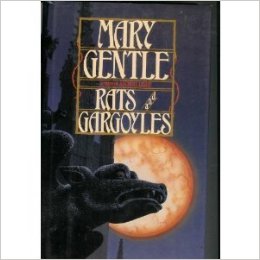
3. White Crow Sequence by Mary Gentle. First published in the UK by Bantam in 1990, it's not easy to find a paper version of these books in the US, aside from used books. Kindle editions of the series (Rats and Gargoyles, The Architecture of Desire, Left to His Own Devices, and White Crow).

This story is about Valentine the White Crow, a scholar-soldier who has fled from her suitor to a vast city at the centre of the world. The city's humans are ruled by an aristocracy of humanoid rats, which are themselves subject to immensely powerful gods who mostly sleep but are growing restless. Aided by various allies, Valentine must face the gods, defuse the conflict between humans and rats - and decide how she really feels about her suitor. Gentle writes beautifully, and her world and story are far from run-of-the-mill fantasy.

4. Jack Whyte's Dream of Eagles series, six books in all. Published between 1992 and 2005 by Forge books. It's the authors take on the Camelot legend. It's sometimes billed as historical fiction, but falls more into historical fantasy. He's a wonderful writer with a fabulous command of language and a penchant for researching to the nth degree. Want to know how to forge a sword using Dark Ages techniques? He's got it.

The series starts with the first person account of a character named Pubilus Varrus as he retells his own history and that of the Roman withdrawal from Britain, but new characters narrate the later books in the series, which ends with the fall of Camelot.

5. The Witcher Series by Andrzej Sapkowski. Not actually novels, the first book in this series was originally published as a collection of five short stories by Wiedźmin, in 1990. Four of the five have since been translated from Polish released in an English-language edition, The Last Wish in 2008. Other story collections in the series include The Blood of Elves, Sword of Destiny, and Baptism of Fire.

Many Americans were introduced to Sapkowski's world and character via the video games by this name. The stories center around the character of Geralt, a monster hunter struggling to maintain his own ethics while operating in a very "gray" universe that should appeal to people who like darker fantasy. The stories are very influenced by the legends and mythology of Eastern Europe and are filled with subtle humor.

6. Lighthouse Duology (Flesh and Spirit and Breath and Bone) by Carol Berg, published in 2008, 2009 by Roc books. This story takes place in a fairly typical early-renaissance sans gunpowder fantasy world, but the writing and characterization are phenomenal in my opinion. The protagonist is a rebellious mage who has been hiding from his family for more than a decade, which is a big deal, because in this world, magi are pampered chattel, controlled by their families and expected to live by rigid set of rules. His situation is complicated by a strange malady that's afflicted him since boyhood, which he self medicates with a forbidden magical ritual that is as addictive as it is agonizing.

The story has a slower start than is typical for modern fantasy, but the author introduces information about the world and the protagonist's situation in a way that keeps the reader guessing until the end. I think it should appeal to fans of writers like Robin Hobb, but it has a tone and style that's all its own.

7. The Book of Words Trilogy by J.V. Jones (The Baker's Boy, A Man Betrayed, Master and Fool). Published by Aspect Books in 1995-1996. The story centers on the adventures of a young woman who refuses to be a pawn in a political marriage and an apprentice baker who has powerful but uncontrolled magical abilities, and it incorporates many familiar fantasy tropes--evil twins, scheming sorcerers, and idealistic knights. But the world building, dialog, and intrigue elevate it beyond run of the mill fantasy. A fun read. The paper book appears to be out of print, but it's still available as a kindle edition.


 8. Tamir Triad by Lynn Flewelling (The Bone Doll's Twin, Hidden Warrior, The Oracle's Queen). These novels take place in the same world (in the land of Skala) as her long-running Nightrunner series, but centuries earlier. They tell the story of Tamir, Skala's greatest Queen, who was magically disguised as a boy at birth in order to hide her from her Usurping uncle. Although the novel uses "prophecy" and "chosen one" tropes, it handles them an interesting perspective--the cost of assuring that they come to fruition.

Though there are several viewpoint characters, Flewelling focuses on the character of "Tobin," who is a shy, lonely, and somewhat peculiar boy who is haunted by the ghost of his twin brother. Flewelling writes compelling and fascinating characters, and the ones in this book have stayed with me longer than most. The main flaw (one I didn't not think so much about the first time I read it), is she missed an opportunity to explore the issues faced by transgender children and teens in more depth.


9. Barry Hughart.  The Bridge of Birds, Del Rey, 1984.  It's a novel of ancient China that never was - but ought to have been.  There are two sequels ( Eight Skilled Gentlemen and The Story of The Stone), but this novel stands alone with no trouble at all.  When the children of his village are afflicted with a mysterious plague, Number Ten Ox heads to the city and recruits a sage to help find a cure, and together they go on a quest. Along the way, they discover they are stuck in the middle of a plot by the Heavenly Emperor of Jade himself.

The book is written in a lyrical, fairy tale style that should delight lovers of classics like The Princess Bride and The Last Unicorn.

10. A Crown of Stars Series by Kate Elliott: This seven book series (starting with King's Dragon) was published between 1997-2006 by DAW books. It is set in the fictitious land of Novaria, and story follows the stories of two young adults, Alain and Liath, as they are drawn into the war that starts when their home is invaded by an inhuman race called the Eika, who had nearly destroyed the world more than 2000 years before.

The author based her world and cultures on real-world medieval kingdoms. The excellent writing and epic scale of the conflict should appeal to fans of Tolkien and George RR Martin.


11. The Witch World series by Andre Norton (first novel Witch World, 1963). Andre Norton was a brilliant writer of both SF and F (the first woman to be awarded the SFWA's Damon night Memorial Grand Master status). and for reasons unknown, she seems to have fallen off the cultural radar in SF and F circles and her books are rarely included on the lists of classics. It's possibly because she was such a prolific writer that no one book or series stands above the others. She was a consummate world builder who often melded SF and F elements. This could also be a reason why her work is often overlooked--people aren't always sure where to categorize it. She also was one of the first speculative fiction writers to include LGBT characters in her work.

Magic is considered to be the sole property of women in this world, and witches lose their powers if they have sex, but the male protagonist has some magical ability, and when he marries a witch woman, both their powers are amplified. This creates some problems with the society's rather conservative ruling caste.

The next installment in this series is available here: http://doggedlywriting.blogspot.com/2015/09/more-forgotten-fantasy-classics-with.html